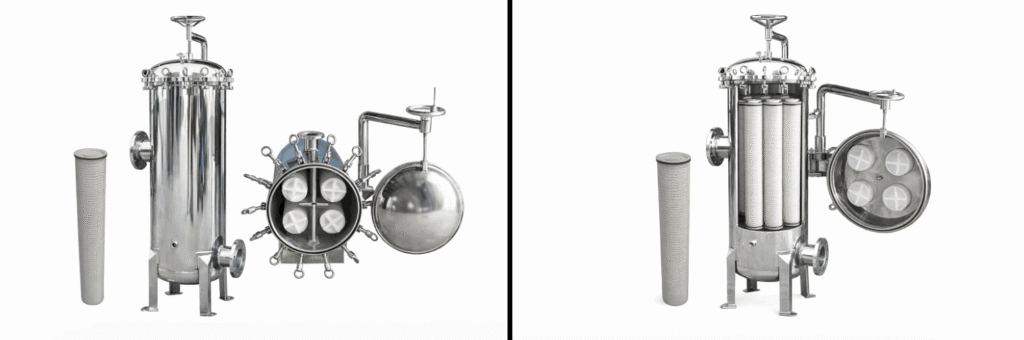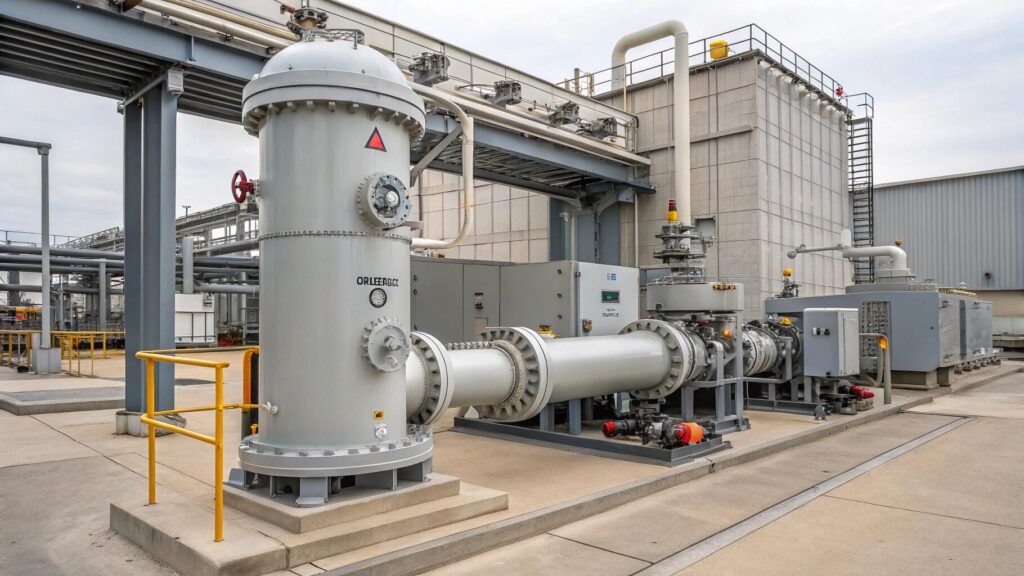
What are the essential differences in the retention mechanisms between pleated high-flow filter cartridges and traditional melt-blown filter cartridges?
You have a critical process, but which filter do you trust? The wrong choice between a pleated and a melt-blown cartridge can lead to particle bypass and system failure.
The essential difference is surface versus depth filtration. Pleated high-flow cartridges primarily use surface filtration, trapping particles on a single, precise layer. Traditional melt-blown cartridges use depth filtration, capturing particles throughout their entire sponge-like structure.
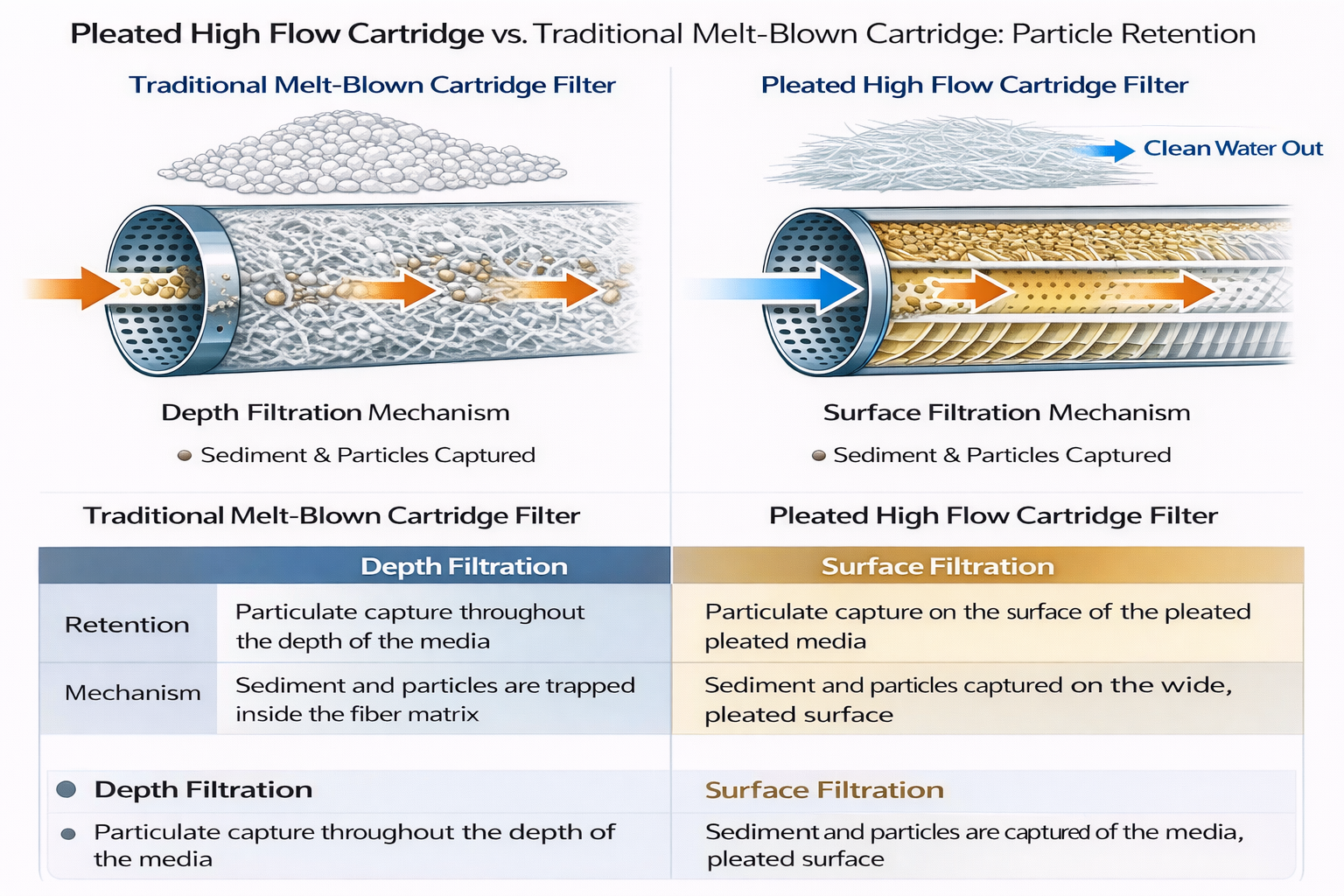
I remember when I first started my career, I thought of all filters as simple strainers. You had a fluid with dirt, and the filter just blocked the dirt from passing through. It seemed so simple. Then a senior engineer showed me a cutaway of a used melt-blown filter. The dirt wasn’t just on the outside; it was embedded deep inside the material, with the outer layers catching big particles and the inner core trapping finer ones. That was my "aha" moment. I realized that how a filter traps particles is just as important as the micron rating on the box. Understanding this fundamental difference is the key to selecting the right filter and avoiding a lot of future problems.
How Do Melt-Blown Filters Actually Trap Particles?
You see a simple, fibrous tube, but how does it effectively remove contaminants? If it’s just a mass of fibers, what stops particles from just finding a way through?
Melt-blown cartridges trap particles using depth filtration. The media is a complex, three-dimensional maze of fibers that is denser on the inside and more open on the outside, capturing particles throughout its entire thickness.
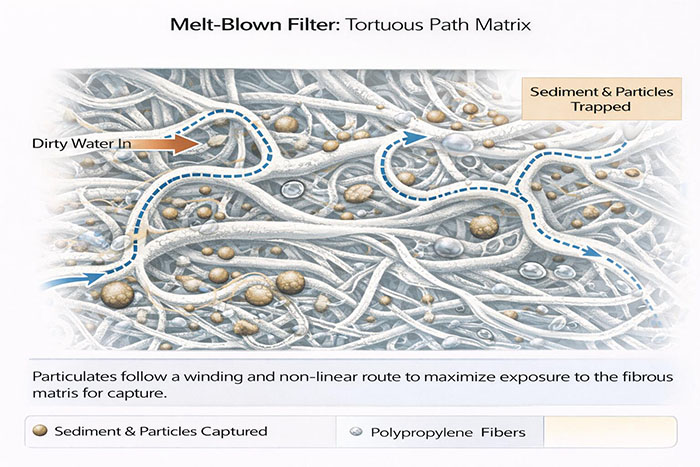
Imagine you are walking through a very thick forest. There is not a solid wall in front of you, but the dense trees, branches, and undergrowth make it very difficult to pass straight through. This is exactly how depth filtration works. A melt-blown cartridge is made of countless thermoplastic fibers that are sprayed and fused together to form a "tortuous path." As water flows through, particles get trapped within this random matrix. The real genius of this design is its graded density. The outer layers have larger pores and looser fibers to catch bigger particles like sand and silt. As the water moves closer to the center, the fibers become more tightly packed to trap smaller particles. This allows the filter to use its entire volume to hold dirt, giving it a high dirt-holding capacity for its size. The main drawback is that it provides a "nominal" rating. Because the paths are random, a small percentage of particles might find a clearer path and get through.
How Is the Pleated High-Flow Mechanism Different?
You see all those folds in a high-flow filter and know it’s for surface area. But if it only traps on the surface, why doesn’t it clog up instantly?
A pleated filter uses surface filtration. The pleats create a massive surface area, allowing it to handle very high flow rates with a low pressure drop. Particles are captured on the surface, much like a screen, providing a more precise and absolute level of filtration.
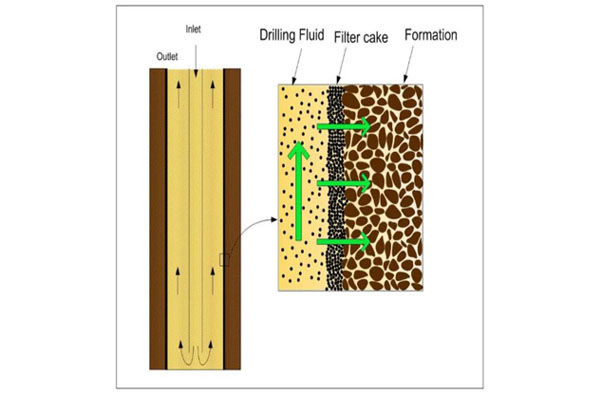
If a melt-blown filter is a dense forest, a pleated filter is a very, very large screen. The key here is the pleating process. A long sheet of filter media is folded back and forth many times before being formed into a cylinder. This simple folding can increase the effective filtration surface area by 10 to 20 times compared to an unpleated cartridge of the same size. This huge surface area is what allows high-flow cartridges to handle such massive flow rates. Because all the water has so much space to pass through, the initial pressure drop is very low. The retention mechanism is primarily surface filtration. The media has a carefully controlled pore size. If a particle is larger than the pore, it is stopped on the surface. This is why pleated filters can offer an "absolute" rating (e.g., 99.98% removal at a specific size). As the filter works, particles build up a "cake" on the surface, which can actually improve efficiency for a while before the pressure drop increases to the point of needing replacement.
What Does This Mean for Filter Performance in the Real World?
You understand the theory, but you have a job to do. How does this difference between depth and surface filtration actually affect your system, your budget, and your maintenance schedule?
The mechanism directly impacts efficiency, filter life, and cost. Pleated surface filtration gives you predictable, absolute-rated performance for critical jobs. Melt-blown depth filtration offers a low-cost, high-capacity solution for less critical applications.
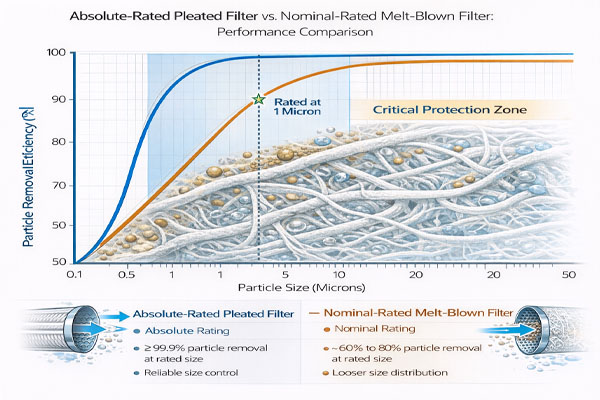
For an engineer like Jacky, this is where the theory becomes practical. The choice between these two types is not just about a single feature; it’s about the entire performance profile of your system. I often use a simple table to help my clients see the full picture.
Comparing Filtration Mechanisms: Real-World Impact
| Feature | Melt-Blown (Depth Filtration) | Pleated High-Flow (Surface Filtration) |
|---|---|---|
| Primary Mechanism | Captures particles throughout a fibrous matrix. | Captures particles on the media surface. |
| Efficiency Rating | Nominal. (e.g., 90% at 10 micron). Some particles can get through. | Absolute. (e.g., 99.9% at 10 micron). Very predictable. |
| Dirt-Holding Capacity | High for its volume, as it uses the entire media depth. | Extremely high due to massive surface area. |
| Particle Unloading | Can release previously captured particles under pressure spikes. | Very low risk. Particles are securely held on the surface. |
| Flow Rate | Lower per cartridge. | Very high per cartridge, allowing for smaller systems. |
| Best Application | General water filtration, pre-filter for less critical systems, low cost. | Critical RO pre-filtration, high-purity water, protecting sensitive equipment. |
In short, if you need a low-cost workhorse for a non-critical application where a few particles getting through is not a disaster, a melt-blown cartridge is a great choice. But if you are protecting an expensive RO system or need to guarantee fluid quality, the absolute rating and superior performance of a pleated high-flow cartridge are essential.
Conclusion
Melt-blown filters use depth filtration for high capacity but nominal ratings. Pleated high-flow filters use surface filtration for precise, absolute-rated performance in critical high-flow applications.