Polypropylene vs. Glass Fiber: How Do You Choose the Right Filter Media?
Choosing between PP and GF filter media is a common engineering headache. Picking the wrong one can mean costly, premature filter failure or simply overpaying for performance you do not need.
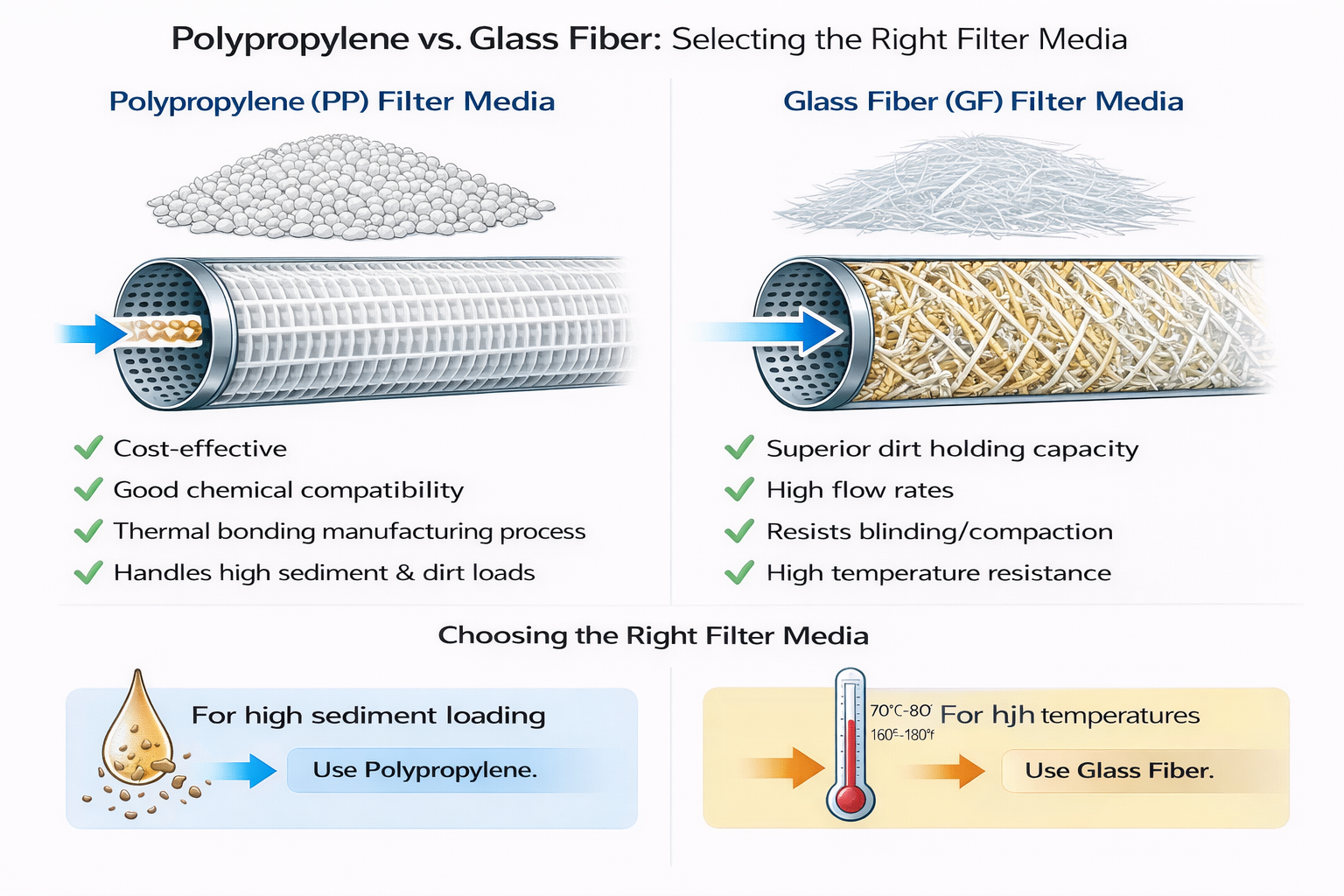
Choose polypropylene (PP) for general-purpose applications with moderate temperatures and standard chemical compatibility. Select glass fiber (GF) for high-temperature environments, aggressive chemicals, or when you need superior filtration efficiency and dirt-holding capacity.
I’ve had this exact conversation with hundreds of engineers over the years. Many assume that a filter is a filter, and the material is just a minor detail. I remember a client who ran a large-scale desalination plant. They were using our standard PP high-flow cartridges for pre-filtration and they worked perfectly. Later, they tried to use the same cartridges for a high-temperature condensate recovery loop in another part of their facility. The filters failed in a matter of weeks. The material couldn’t handle the heat. This is a perfect example of why understanding the fundamental differences between materials like polypropylene and glass fiber isn’t just academic—it’s essential for keeping your plant running smoothly and efficiently.
When Should You Stick with the Industry Standard, Polypropylene?
You need reliable filtration for your process, but your budget is tight. You see more expensive options, but wonder if the standard, proven material is good enough for the job.
Polypropylene (PP) is the ideal choice for most standard applications, including municipal water treatment, RO pre-filtration, and general industrial water. It offers excellent performance at a lower cost when temperatures and chemical aggression are not extreme.
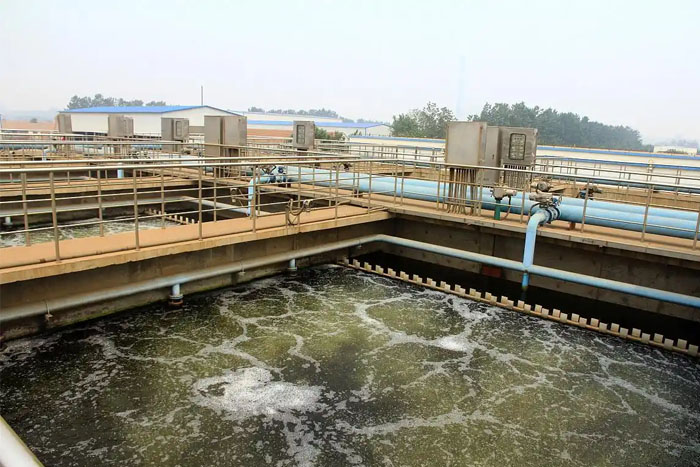
Polypropylene is the workhorse of the filtration world for a reason. It provides a fantastic balance of performance, chemical compatibility, and cost-effectiveness. In my experience, for probably 70% of the applications I see, PP is all you need. It’s a very clean material, it’s structurally robust, and it’s compatible with a wide range of fluids. We see it used everywhere, from protecting RO membranes in desalination plants to filtering cooling water in power plants. The key is to understand its limits. PP works great in temperatures up to around 80°C. Beyond that, it starts to soften and lose structural integrity. While it has good chemical compatibility with many acids and bases, it can be attacked by strong oxidizing agents and certain organic solvents. If your application fits within these boundaries—moderate temperature, non-aggressive chemistry—then choosing PP is a smart, economical decision that delivers reliable performance without over-engineering the solution.
What Problems Justify the Upgrade to Glass Fiber?
Your standard PP filters are not lasting. They are either failing under high temperatures, getting degraded by chemicals, or they just aren’t capturing fine particles effectively enough for your process.
Upgrade to glass fiber (GF) when you face high temperatures, aggressive chemicals, or need higher efficiency. GF excels in demanding conditions like high-temperature condensate up to 121°C or filtering petrochemical solvents.
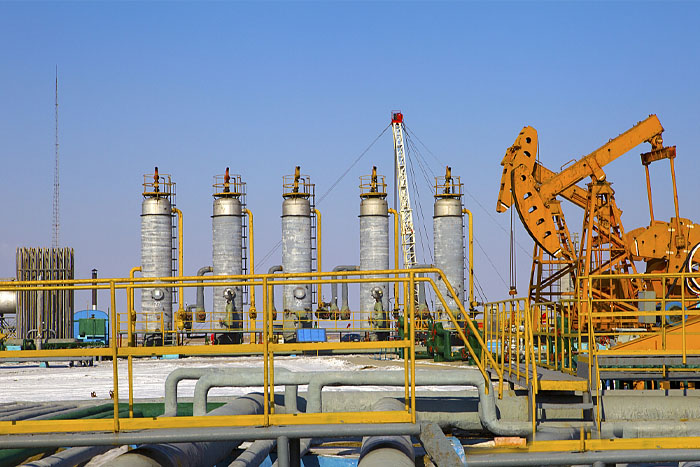
Glass fiber is what you turn to when the workhorse can’t handle the job. The "upgrade" to GF is always driven by a specific problem that PP can’t solve. The most common reason I see engineers switch is temperature. A GF/PET media blend, like our HFLH Series, is specifically designed to operate continuously in environments up to 121°C, making it perfect for high-temperature condensate or steam process water. The second major reason is chemical compatibility. Glass is chemically inert to many of the substances that attack polypropylene. This makes it an excellent choice for filtering aggressive fluids like petrochemical solvents or for use in processes where chemical resistance is critical. Finally, there is the issue of performance. The fine fibers used in GF media can create a filter structure that offers higher particle capture efficiency and a greater dirt-holding capacity. For applications like ultrapure water or high-precision chemical processing, that superior performance is not a luxury; it is a necessity.
How Do PP and GF Stack Up in a Head-to-Head Comparison?
You have the individual details, but seeing them side-by-side is what makes the choice clear. You need a simple way to compare the materials across the factors that matter most.
A direct comparison shows PP is the economical choice for standard conditions. GF provides essential resistance to heat and aggressive chemicals, justifying its higher cost for demanding or critical applications.
| Parameter | Polypropylene (PP) | Glass Fiber (GF) |
|---|---|---|
| Material Type | Thermoplastic Polymer Fiber | Inorganic Microglass Fiber |
| Filtration Structure | Depth Filtration | Depth & Surface Composite Filtration |
| Common Manufacturing Process | Melt-blown / Pleated | Microglass Pleated |
| Filtration Efficiency | Medium | High |
| Dirt Holding Capacity | Medium | Very High |
| Flow Rate | High | Very High |
| Initial Pressure Drop | Low | Low |
| Max Operating Temperature | ≤80°C | ≤120°C |
| Chemical Compatibility | Excellent (Broad acid/base tolerance) | Moderate |
| Mechanical Strength | High | Relatively Brittle |
| Cost | Low | High |
| Common Micron Rating | 1–100 µm | 0.5–20 µm |
| Application Type | General Industrial Filtration | High-Performance Industrial Filtration |
| Typical Industries | Water Treatment / Food & Beverage / Chemicals | Power Generation / Desalination / Petrochemicals |
| Use Case | Pre-filtration | Heavy-duty Filtration |
For an engineer like Jacky who has to balance performance, cost, and reliability, a direct comparison is the most helpful tool. When I’m on a call with a client trying to make this decision, I often sketch out a simple table just like this one. It cuts through the complexity and makes the choice obvious based on the specific needs of their system. Looking at them side-by-side, you can clearly see that these two materials are designed for different jobs. Neither one is universally "better"; they are just optimized for different conditions. The goal is to match the material’s strengths to the challenges of your application.
Practical Application Comparison: PP vs. GF
| Feature | Polypropylene (PP) | Glass Fiber (GF) |
|---|---|---|
| Max Temperature | Good up to ~80°C | Excellent, can handle up to 121°C. |
| Chemical Resistance | Good for general use, weak against strong oxidizers & some solvents. | Excellent, inert to most chemicals, ideal for aggressive solvents. |
| Filtration Efficiency | Good, often provides nominal ratings. | Excellent, finer fibers can provide higher efficiency and absolute ratings. |
| Cost | Lower, very economical for general use. | Higher, a premium material for demanding jobs. |
| Common Applications | RO Pre-filtration, Municipal Water, Power Plant Cooling Water, Food & Beverage. | High-Temp Condensate, Petrochemical Solvents, Ultrapure Water, High-Precision Chemicals. |
Conclusion
Choose polypropylene for cost-effective, general-purpose filtration. Opt for glass fiber when your system involves high temperatures, aggressive chemicals, or demands the highest level of filtration efficiency.