How to Reduce Your Total Annual Cost of Filtration (TCO) by Switching to High-Flow Filters?
Switching from traditional 2.5" cartridges to High-Flow (6.5") filtration technology optimizes TCO through four primary drivers:
Lower Purchase Cost: 1 high-flow element replaces 20-30 standard ones, reducing initial cartridge spend by up to 25%.
Reduced CAPEX: Housing footprint is reduced by 50%, lowering piping and installation costs by 30%.
Labor Efficiency: Change-out time drops from 120 minutes to 15 minutes due to single-element handle designs.
Waste Optimization: Annual consumable waste volume decreases by 80%, drastically lowering environmental disposal fees.
Question 1: Why is it said that the purchase cost is lower despite the higher price per filter cartridge?
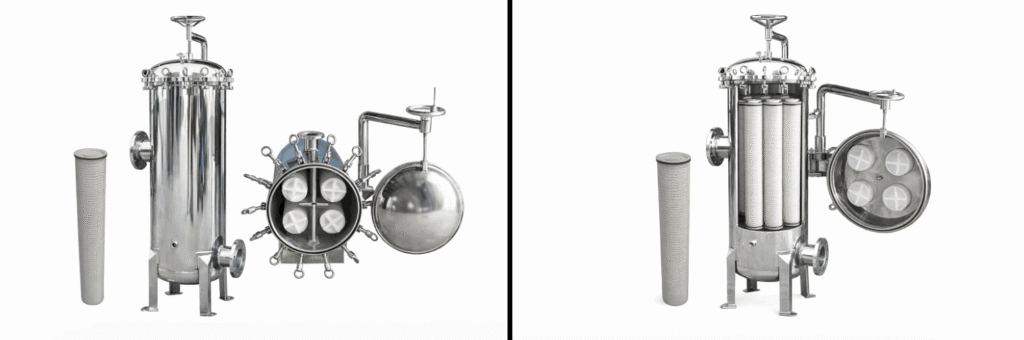
Technical Answer: High-flow filters typically use a large 6.5-inch diameter design. A single 40-inch filter cartridge can have an effective filtration area of over 10 m², approximately 20-30 times that of a traditional 2.5-inch filter cartridge.
Application Scenario: In a reverse osmosis pretreatment system with a processing capacity of 100³³.
Actual Test Data: To achieve the same flow rate, a traditional system requires approximately 30-40 standard filter cartridges, while a high-flow system only requires 2-3. Despite the higher unit price, the total number of filter cartridges purchased is reduced by 90%, resulting in a 15%-25% reduction in initial filter cartridge investment costs.
Question 2: How much can be saved in terms of floor space and equipment investment (CAPEX)?
Technical Answer: Due to the extremely high processing capacity of a single unit, the filter housing can be made smaller. High-flow-rate filter cartridges employ an inside-out flow direction, allowing for higher flow velocities within a smaller housing diameter.
Application Scenarios: Desalination vessels or factory expansion projects with limited space.
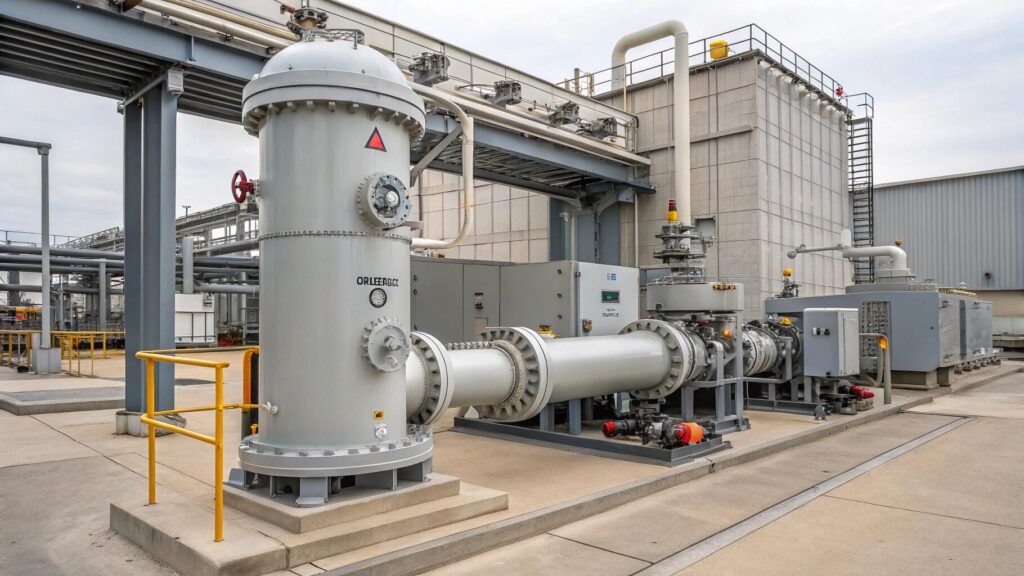
Actual Test Data: For processing the same flow rate, high-flow-rate filters occupy only 1/4 to 1/2 the floor space of traditional multi-cartridge filters. Housing costs, associated piping, valves, and installation labor costs are reduced by over 30%.
Question 3: How to reduce the most expensive costs: "downtime maintenance" and "labor costs"?
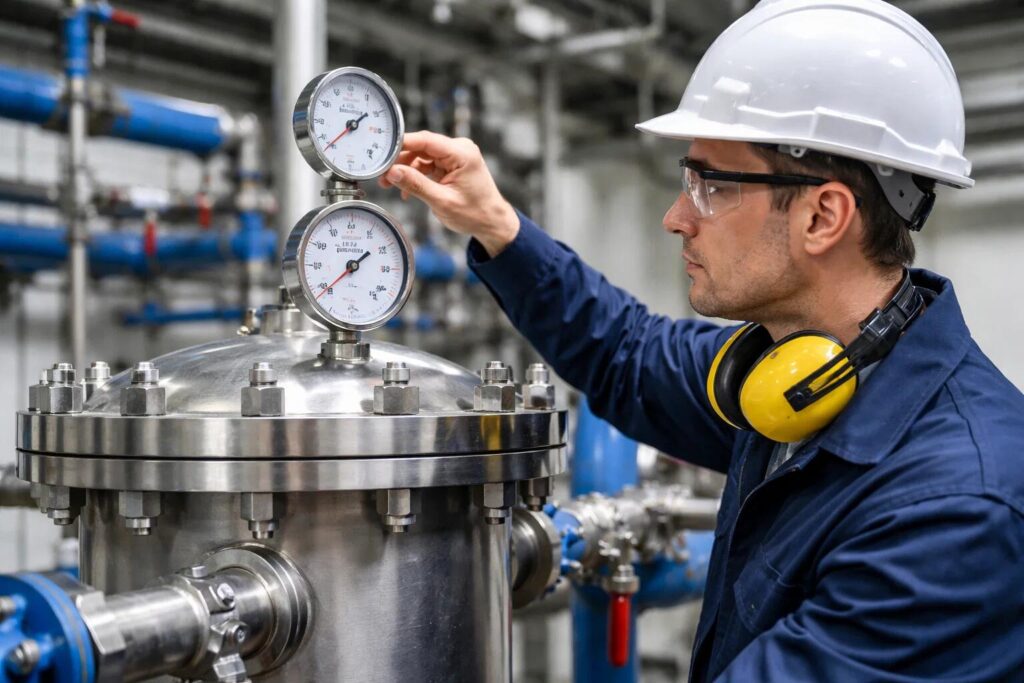
Technical Solution: Replacing 40 filter cartridges in a traditional system can take up to 2 hours and involves extensive inspection and alignment of seals; high-flow-rate filter cartridges feature a handle design, allowing for quick installation and removal by a single person.
Application Scenarios: Fine chemical or power plant water treatment workshops where a one-hour production line downtime results in losses of tens of thousands of yuan.
Actual Test Data: The time to replace a set of filter cartridges is reduced from 120 minutes to 15 minutes. Because of the extremely small number of filter cartridges, the risk of leaks due to human error is virtually zero, significantly reducing troubleshooting costs.
Question 4: How can annual maintenance expenses be directly optimized by reducing consumable waste?
Technical Answer: The pleated structure of high-flow filter cartridges provides an extremely high dirt-holding capacity. Before the pressure differential reaches the replacement standard (typically 2.4 bar), it captures a far greater amount of impurities than a traditional filter cartridge of the same volume.
Application Scenarios: Enterprises with strict environmental standards for waste disposal (or high disposal costs). Real-world Data: A large power plant’s tests showed an 80% reduction in annual waste filter cartridge volume. This not only means a lower frequency of consumable purchases but also reduces hazardous waste disposal costs and warehousing management costs.