How to Choose the Right High Flow Filter for Solar Panel Cleaning
You picked a 5-micron filter, but your RO membranes are still fouling. The constant filter changes are killing your budget and your schedule. This isn’t just bad luck.
The right choice depends on three key factors: the micron rating (absolute vs. nominal), the filter media (polypropylene is best for most water sources), and the physical construction (which ensures it can handle high flow rates without collapsing).
I once worked with a team cleaning a massive solar installation near a factory. They were using pond water that had some light chemical residue. They chose a standard filter that had the right micron rating, but the media started to break down after a few days. The filter literally fell apart inside the housing. That expensive lesson taught me that the choice goes much deeper than just the numbers on a spec sheet. You have to look at the whole picture to get a filter that is truly reliable in the field.
What does the micron rating actually mean?
You use a 10-micron filter, but silt still gets through. You feel like the ratings are meaningless and you cannot trust the specs you are given.
The micron rating tells you the size of particles it can stop. The key is understanding the difference between a "nominal" rating (an average) and an "absolute" rating (a guarantee). For protecting equipment, you always need an absolute-rated filter.
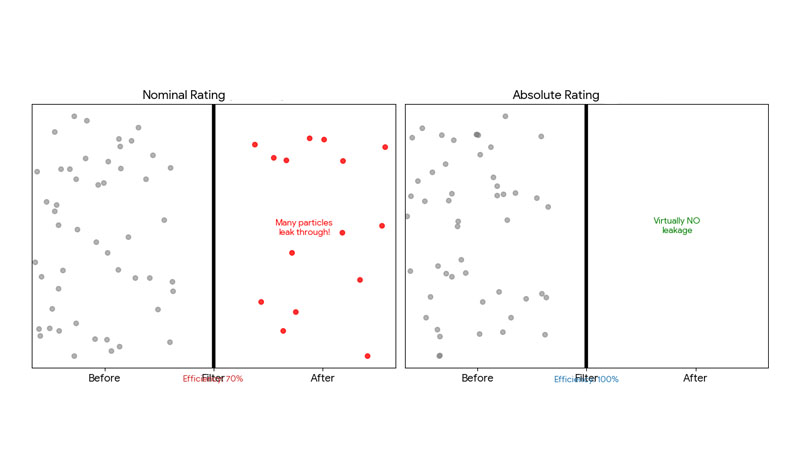
This is the single most important detail to get right, and it is where most mistakes are made. It is the difference between hoping you are protecting your equipment and knowing you are protecting it. For an engineer like Jacky who is responsible for the health of an expensive RO system, this distinction is critical.
Why Absolute Rating is Non-Negotiable
A nominal rating means the filter will remove some of the particles at that size. For example, a 10-micron nominal filter might remove 90% of 10-micron particles. That sounds good, but the 10% that gets through will slowly grind away at your pumps and foul your membranes. An absolute rating is a performance guarantee. A 10-micron absolute filter is certified to remove 99.9% or more of 10-micron particles. When you are trying to produce low-silt water for an RO system, this level of certainty is not a luxury, it is a requirement. Using a nominal filter here is like trying to build a waterproof wall with a few small holes in it. It might look fine, but it will eventually fail.
| Rating Type | Efficiency | Best For | Result |
|---|---|---|---|
| Nominal | ~85-95% | General purpose, non-critical | Some particle bypass, risks downstream equipment |
| Absolute | 99.9%+ | RO protection, critical applications | Consistent, reliable particle removal |
Which filter media should you choose?
Your filter works well one week but breaks down the next. You suspect the water quality is changing, but your filter should be able to handle it.
For solar panel cleaning water, melt-blown polypropylene (PP) is almost always the best choice. It has excellent chemical compatibility, handles a wide pH range, and provides great dirt-holding capacity without adding anything to the water.
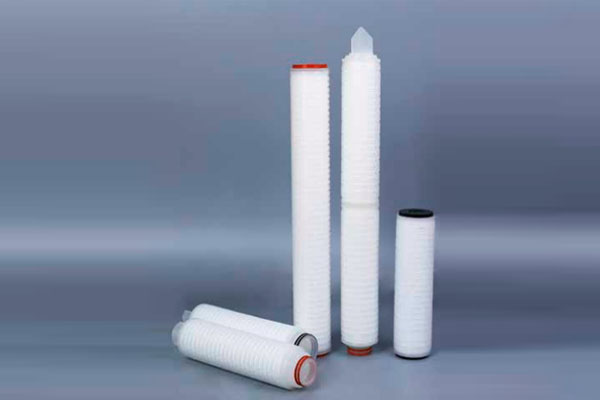
The material your filter is made from is just as important as its micron rating. The water you use for solar panel cleaning can come from a variety of sources like wells, ponds, or canals. This water can have unpredictable chemistry. You need a filter media that is tough enough to handle anything.
Polypropylene vs. Other Media
For this application, polypropylene is the industry standard for very good reasons. First, it has extremely broad chemical compatibility. It can handle the pH swings and trace contaminants often found in agricultural or industrial areas without breaking down. Second, high-quality polypropylene filters are made without binders, glues, or surfactants. This is very important because those additives can leach out of the filter and foul your RO membranes. Finally, the structure of the media itself is designed for high performance. It often has a "graded density," meaning the outer layers are more open to catch large particles, while the inner layers are tighter to catch fine particles. This allows the filter to use its full depth to hold dirt, which means it lasts much longer. While other media like microglass exists, it is more expensive and typically used for higher temperatures or specific chemicals you will not find here.
Does the filter’s construction quality matter?
You found a cheaper filter that fits, but it collapsed under pressure. Now your system is down, and you have a messy and expensive problem to fix.
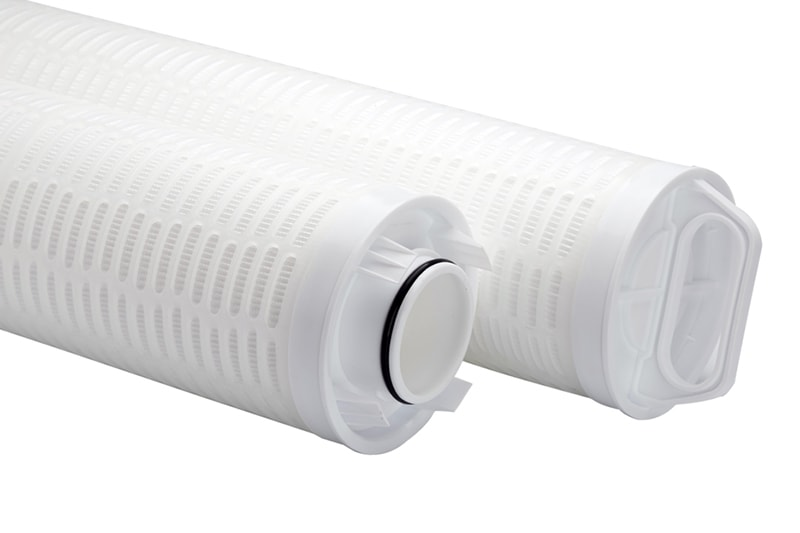
Yes, it is critical. Look for thermally welded seams and end caps, a rigid outer cage, and a strong inner core. This construction prevents the filter from collapsing or bypassing under the high flow and pressure changes common in mobile systems.
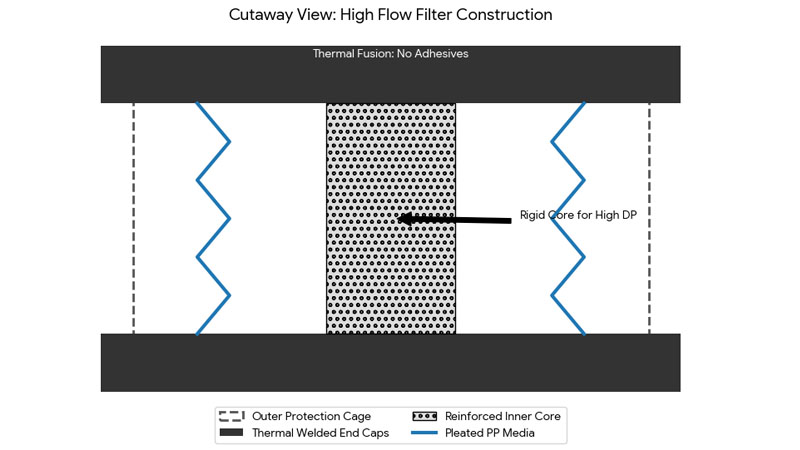
A high-flow filter has to withstand a tremendous amount of force. When it starts to get dirty, the pressure building up against the media is huge. A poorly made filter will simply collapse under this stress. This is why you must look closely at how the filter is built.
Key Construction Features to Check
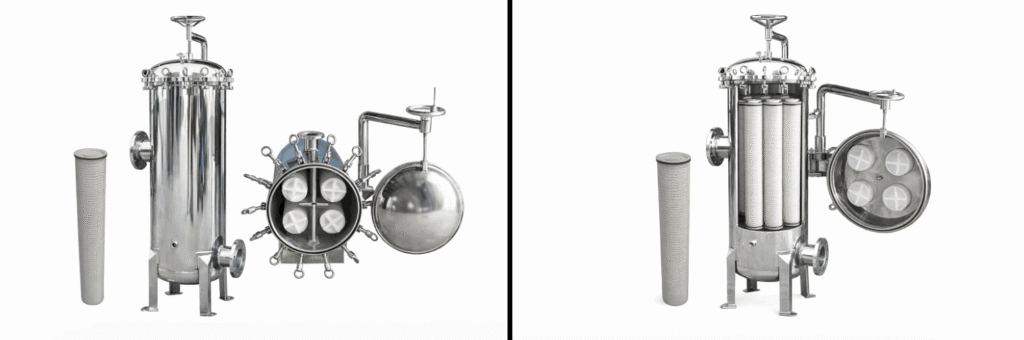
The first things to look for are the inner core and the outer cage. These provide the structural skeleton for the filter. On a cheap filter, these will feel thin and flimsy. A quality filter will have a thick, rigid core and cage that prevent the pleated media from being crushed. Next, look at the end caps. The best filters use a process called thermal welding to attach them. This melts the end cap directly to the filter media, creating one solid piece of polypropylene. This is far stronger than using glue, which can fail under pressure or leach chemicals. Finally, check the seals. A small O-ring or gasket is the only thing preventing dirty water from bypassing the filter. A quality filter will use durable materials that create a perfect seal every time. These details are what separate a reliable filter from one that will fail you in the field.
Conclusion
Choosing the right filter is simple when you focus on the right details. Prioritize an absolute micron rating, polypropylene media, and strong, thermally welded construction for reliable performance.