How do the depth and number of folds in filter media determine the final dirt holding capacity?
Your filters clog up way too fast, forcing constant shutdowns and driving up replacement costs. You need a filter that lasts longer, but how do you choose one?
Deeper and more numerous pleats create a larger surface area inside the filter cartridge. This larger area provides more space to capture and hold dirt, which directly translates into a higher dirt-holding capacity and a longer service life.
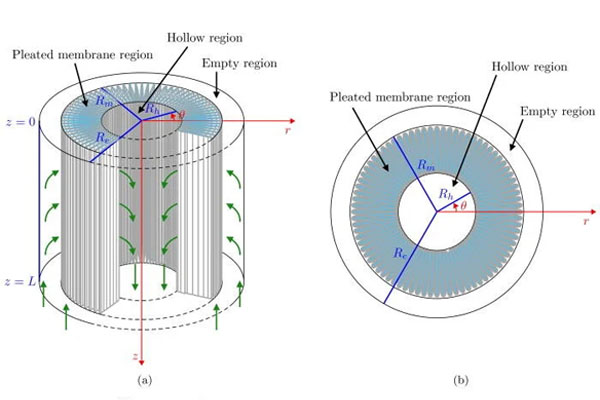
The secret to a long-lasting filter isn’t just its micron rating; it’s in the physical construction of the media itself. I once consulted for a large power plant that was burning through pre-filters for their RO system every few days. They were using a 5-micron filter, which should have been correct for the job. But when I cut one of the failed cartridges open, I saw the problem immediately. The pleats were very shallow and packed loosely. It had a low effective surface area. We switched them to a filter with the exact same 5-micron rating but with a much deeper, more optimized pleat design. Their filter life more than tripled overnight. It was a powerful reminder that how you fold the paper is just as important as the paper itself.
Why is more surface area important for a filter?
You see "high surface area" advertised on filter spec sheets, but what does it really mean for your system? Is it just a marketing buzzword, or does it deliver real value?
A larger surface area gives contaminants more places to land before they block fluid flow. This directly increases the filter’s dirt holding capacity, extends its life, and helps maintain a lower pressure drop for longer.
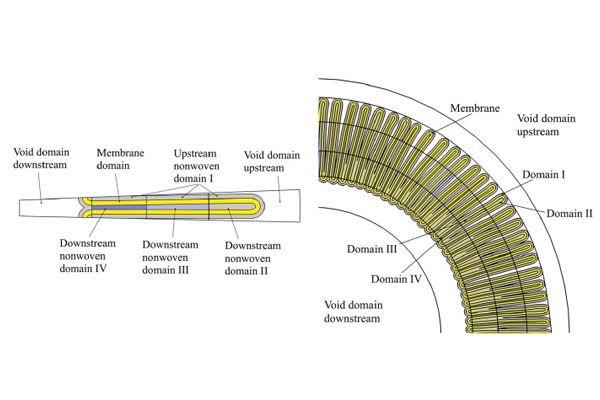
Think of your filter as a parking lot for dirt particles. A simple, non-pleated filter is like a small, single-level parking lot on a small piece of land. It fills up very quickly. Pleating is the genius trick we use to build a multi-story parking garage on that same small piece of land. By folding the filter media back and forth, we can pack a massive amount of surface area into the small, cylindrical shape of a filter cartridge. This is the single most important factor for dirt holding capacity (DHC). With more area, there are more paths for the fluid to take and thousands more sites for dirt particles to be captured without blocking the whole system. This means the filter can "park" a lot more dirt before the "Lot Full" sign goes up—which, in filtration, is a rapid increase in differential pressure that tells you it’s time for a change.
How does the depth of the pleat affect dirt holding?
You notice some filters have deep, open pleats while others have shallow ones. Is one design better than the other, or is it just a difference in manufacturing style?
Deeper pleats create more volume within the folds to store captured dirt. This prevents the filter surface from blinding quickly and significantly increases the total amount of contaminant the filter can hold before it clogs.
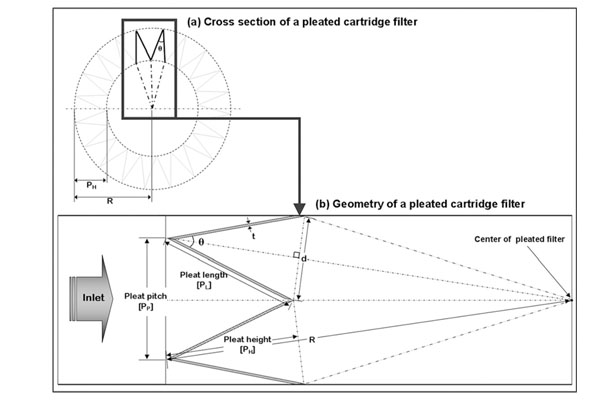
If surface area is the size of the parking lot, pleat depth is the size of the individual parking spaces. Deeper pleats create more three-dimensional space for contaminants to accumulate. As dirt builds up on the filter media, it forms a "filter cake." In a filter with shallow pleats, this cake quickly builds up and can "bridge" the gap between the peaks of the folds. When this happens, large sections of the filter surface are blocked off and become useless, causing the pressure to spike and the filter to fail prematurely. Deep pleats, on the other hand, provide a large, open channel for the fluid to flow into and a lot more room for that filter cake to build up without obstructing flow. This means you utilize much more of the total available surface area, leading to a much higher dirt holding capacity and a longer, more predictable filter life.
How does the number of pleats impact performance?
It seems logical that more pleats would always be better. But if you pack them in too tightly, do you reach a point where it actually hurts performance?
While more pleats increase surface area, packing them too close together restricts flow and causes "pleat blinding." An optimal design balances the number of pleats with their depth to maximize the usable surface area.
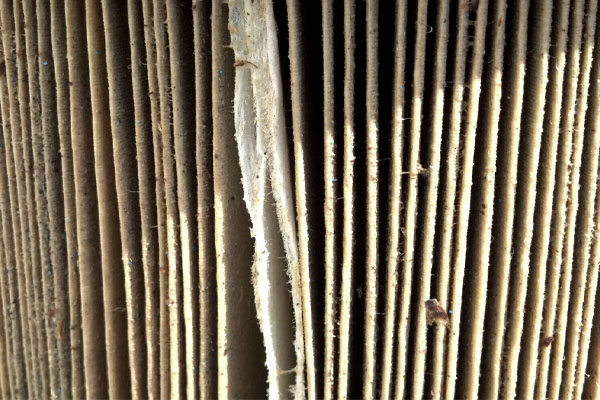
This is where smart filter design comes into play. It’s a classic engineering trade-off. Just adding more and more pleats into a cartridge isn’t always the answer. If the pleats are crammed together too tightly, the fluid can’t effectively flow into the channels between them. The flow takes the path of least resistance, so only the very outer edges of the pleats do any real work. Particles quickly get stuck at the entrance of these narrow channels, a phenomenon we call "pleat blinding." This effectively seals off the vast majority of the filter’s surface area, making it useless. A well-designed high-flow cartridge has an optimized "pleat pack" that balances the number of folds and their depth. The goal is to maximize the surface area while ensuring the channels are open enough for the fluid to access the entire pleated surface, from the outer edge right down to the root. It’s not about the total theoretical area, but the total effective area.
Pleat Design Trade-Offs
| Feature | Too Little / Too Shallow | Optimized | Too Much / Too Tight |
|---|---|---|---|
| Surface Area | Low | High & Effective | High but Ineffective |
| Dirt Capacity | Very Low | Very High | Low to Medium |
| Filter Life | Short | Long | Short (due to blinding) |
| Pressure Drop | Rises very quickly | Rises slowly and predictably | Rises very quickly |
Conclusion
A filter’s true capacity is defined by its usable surface area. This is achieved not just by adding more folds, but by optimizing the balance between pleat depth and number.