Hard Water vs Purified Water in Solar Cleaning: What You Need to Know
You’re cleaning solar panels with hard water, thinking you’re boosting efficiency. Instead, you’re leaving behind damaging mineral spots that are actively reducing your power output.
Hard water contains dissolved minerals that leave light-blocking residue when evaporated. Purified water, created by filtration, has these minerals removed. It cleans panels effectively and dries completely spot-free, protecting your investment and maximizing energy production.
I once worked with a client who owned a series of commercial car washes. He decided to install solar panels on the roof to offset his high electricity bills. To save money, he had his staff clean the panels using the same softened water they used for the car wash. He couldn’t understand why his energy savings were so far below the projections. When we got up on the roof, the panels were covered in a hazy, white film. The water softener was only exchanging calcium for sodium ions—it wasn’t removing the dissolved solids. He was essentially salting his panels. This showed me that even "treated" water can be the wrong water if you don’t understand the chemistry behind it.
Why is hard water so bad for solar panels?
You assume that since tap water looks clean, it must be safe for your panels. But the invisible minerals within it are causing cumulative damage with every single wash.
The minerals in hard water form a tough scale that blocks sunlight. More importantly, these alkaline deposits can slowly etch and destroy the panel’s vital anti-reflective coating, causing irreversible damage.
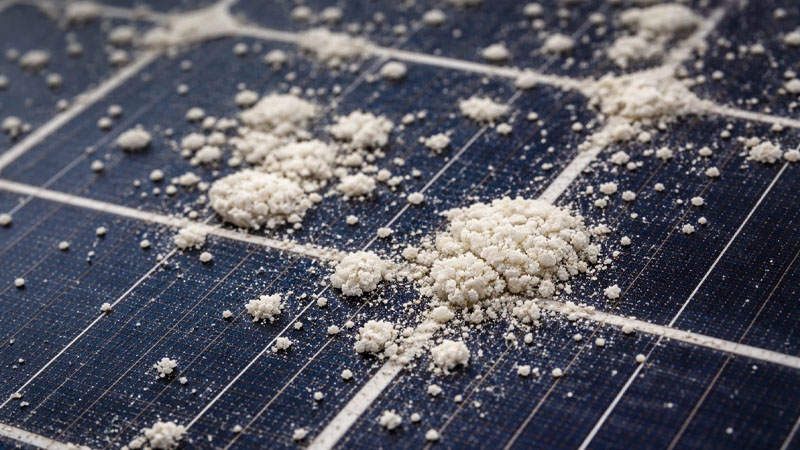
The problem with hard water is what you can’t see. It’s filled with dissolved mineral salts, primarily calcium and magnesium carbonate. When you spray this water on a hot solar panel, the pure H₂O evaporates almost instantly, but all those minerals are left behind. This creates two major problems.
The Shading Effect
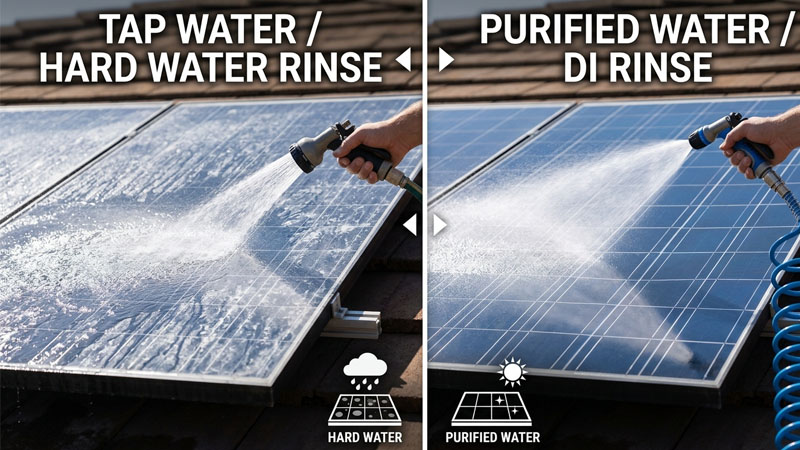
The first issue is simple shading. The white mineral film, often called limescale, is opaque. It forms a physical barrier that blocks sunlight from reaching the photovoltaic cells underneath. Even a very thin, hazy layer can scatter enough light to cause a measurable drop in power output. You are paying to clean the panels, but the hard water residue is creating a new layer of soiling that defeats the purpose.
Chemical Damage to Coatings
The second issue is far more serious. Solar panel glass is engineered with a microscopic anti-reflective (AR) coating. Its job is to help the glass absorb as much light as possible. Hard water deposits are alkaline. When this alkaline scale is baked onto the glass by the sun, it starts a chemical reaction that permanently etches and damages the delicate AR coating. This damage cannot be repaired. It permanently reduces the panel’s ability to absorb light, leading to a slow but irreversible decline in its lifetime performance.
What makes purified water the better choice for cleaning?
You need a cleaning method that reliably improves efficiency without any negative side effects. Using the wrong water is a gamble, but purified water is a guaranteed safe and effective solution.
Purified water has virtually zero dissolved minerals. This makes it a powerful cleaning agent that dissolves dirt and then evaporates completely, leaving no residue. This guarantees a spot-free finish and protects the panel’s surface.
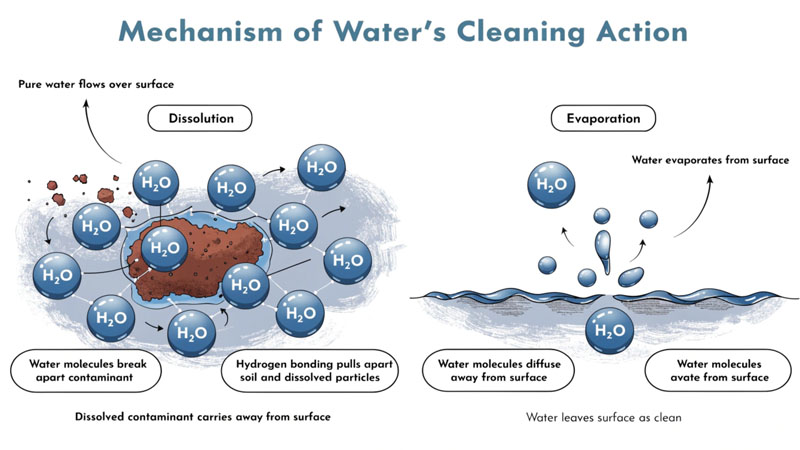
Purified water is the opposite of hard water. By using filtration technologies like Reverse Osmosis (RO) or Deionization (DI), we strip out all the dissolved minerals, leaving only pure H₂O. This pure state gives it two key advantages. First, it is an incredibly effective cleaning agent. Because it contains no dissolved solids, it has a high capacity to dissolve and absorb dirt, grime, and pollen from the panel surface. We sometimes call it "hungry water" because it actively pulls contaminants away. Second, and most importantly, it leaves nothing behind. When the cleaning is done, the pure water evaporates and vanishes completely. There are no minerals to form spots, no scale to block light, and no alkaline residue to damage the AR coating. It is the only way to guarantee you are returning the panel to its factory-clean state.
Cleaning Water Comparison
| Feature | Hard Water | Purified Water |
|---|---|---|
| Mineral Content | High (Calcium, Magnesium) | Near-Zero |
| Evaporation Result | Leaves white spots/scale | Leaves nothing |
| Effect on AR Coating | High risk of etching/damage | No risk |
| Cleaning Efficiency | Low (leaves new residue) | High (removes all residue) |
How can you tell if your water is hard?
Your water comes out of the tap looking perfectly clear, so you assume it is clean enough. But you could be causing expensive damage without a reliable way to check the water quality.
The most reliable way is to use a digital Total Dissolved Solids (TDS) meter. This simple device instantly measures the mineral content in Parts Per Million (PPM). Any reading over 50 PPM is a sign that you should not use it on solar panels.
While there are visual clues like limescale buildup on faucets or soap that doesn’t lather well, you can’t rely on them for something as important as protecting a solar asset. The only professional way to know your water’s quality is to measure it. A handheld TDS meter is an essential and inexpensive tool for this job. It measures the electrical conductivity of the water—which is directly related to the amount of dissolved mineral salts—and gives you an instant reading in Parts Per Million (PPM). This number tells you exactly what you are dealing with. For solar panel cleaning, the goal is to get this number as close to zero as possible. Testing your source water gives you the data you need to decide if you need a purification system. It removes all the guesswork.
Conclusion
Hard water leaves damaging mineral scale on solar panels, reducing power and causing harm. Use purified water to clean safely, protect your investment, and ensure peak performance.