Given the global trend towards environmental protection, what are the prospects for the treatment of waste high-flow filter cartridges and the development of recyclable materials?
Your facility generates a pile of used high-flow cartridges every month. You see them as a growing mountain of industrial waste, a costly disposal problem, and a contradiction to your company’s sustainability goals.
The future for waste filters is moving from landfills to recycling loops. The focus is on developing single-polymer cartridges, like polypropylene, and using advanced treatments like pyrolysis to recover valuable materials and energy, turning waste into a resource.
I remember talking to a plant manager in Canada who was genuinely troubled by their "filter graveyard." They had a dedicated area where hundreds of bulky, used high-flow cartridges were stacked on pallets, waiting for a hazardous waste truck. He told me, "Doris, I spend my day making our water cleaner, only to create a pile of plastic waste that will sit in the ground for a thousand years." His words stuck with me. We, as engineers, design systems for efficiency and purity. But we can no longer ignore what happens to our components at the end of their life. The conversation is shifting. We are now looking for solutions that consider the entire lifecycle, from manufacturing to disposal and, hopefully, rebirth.
What are the current disposal methods and their problems?
You are stuck with used filters, and your only choices seem to be burying them or burning them. Both options are expensive, heavily regulated, and feel like you are just moving the problem somewhere else.
Currently, most filters go to landfills or incineration. Landfilling consumes space and risks leaching contaminants. Incineration can release pollutants and create hazardous ash, making both methods increasingly unsustainable and costly.
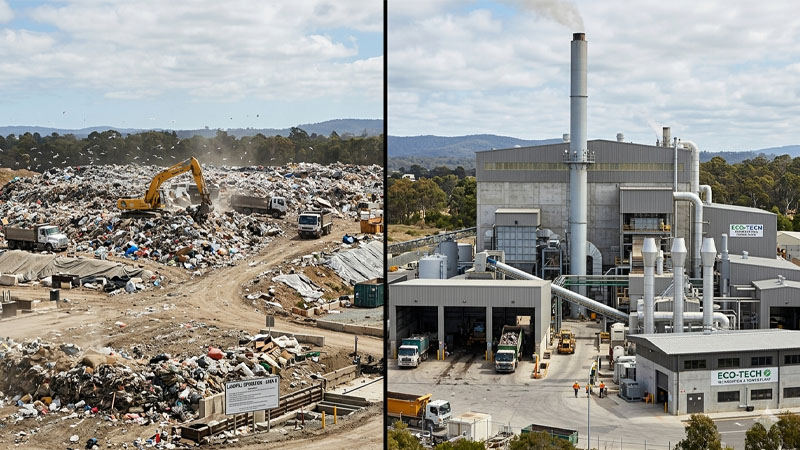
For decades, the industry has relied on two simple but problematic disposal methods. The most common is sending used cartridges to an industrial landfill. The biggest issue here is that the filter materials, like polypropylene, are not biodegradable. They just break down into smaller microplastics over centuries. More importantly, these filters contain a concentrated amount of whatever they filtered out. If these are hazardous materials, there is a long-term risk of them leaking and contaminating soil and groundwater. The other option is incineration. In a modern waste-to-energy facility, this can seem like a good choice because it generates electricity. However, burning plastic releases carbon dioxide. Depending on the contaminants trapped in the filter, the process can also release toxic gases that require expensive scrubbing systems. At the end, you are still left with ash, which is often classified as hazardous waste itself and must be sent to a specialized landfill.
| Method | Advantages | Disadvantages |
|---|---|---|
| Landfill | Simple; relatively low initial cost. | Consumes land; risk of leaching; plastic doesn’t biodegrade. |
| Incineration | Reduces volume; can generate energy. | Creates air pollution (CO2, toxins); ash is often hazardous. |
What does the future of recyclable filter materials look like?
You want to make a sustainable choice but feel limited by today’s filter materials. It seems like you have to choose between high performance and environmental responsibility, with no way to get both.
The future is in designing filters from a single, recyclable polymer like polypropylene. These designs avoid mixed materials, making it possible to clean, shred, and remelt the used filters into pellets for manufacturing new plastic goods.
This is where the most exciting developments are happening. For filters that are too contaminated for traditional mechanical recycling, we can turn to advanced chemical processes. The leading technology here is pyrolysis. Instead of burning the waste, pyrolysis cooks it in a reactor with no oxygen. This process breaks the long polymer chains of the plastic down into simpler, valuable molecules. A typical output is about 50-75% liquid oil, which can be refined into fuel, and 10-30% synthetic gas, which can be used to power the pyrolysis process itself. The remaining solid is a carbon-rich material called char. What makes this so powerful is that the high temperatures can also break down many hazardous organic contaminants, neutralizing them. This method doesn’t just recycle the plastic; it deconstructs the entire waste product—filter and contaminant—and turns it into new energy and raw materials. It is a true circular economy solution that is perfect for dealing with difficult industrial waste. The future of filter disposal is shifting from a linear landfill model to a circular one. This involves designing recyclable single-material cartridges and using advanced treatments like pyrolysis to turn industrial waste into valuable resources.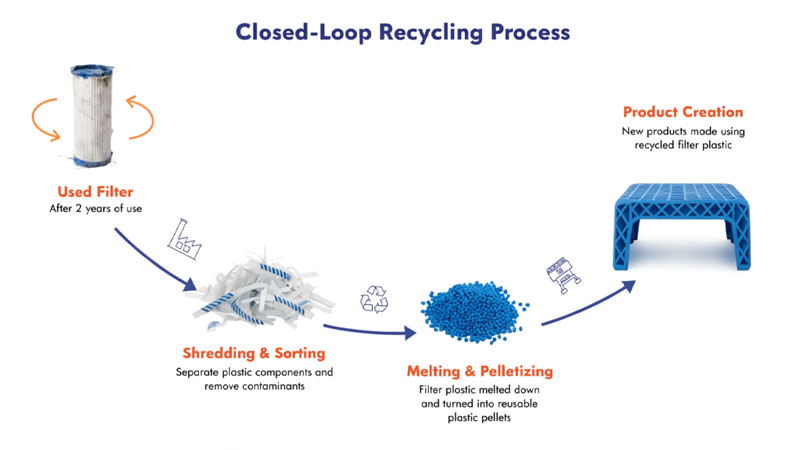
Conclusion