🌊 2025 Was a Wake-Up Call for Condensate Polishing: How to Survive the "Iron Tsunami" and Cut OPEX by 60%
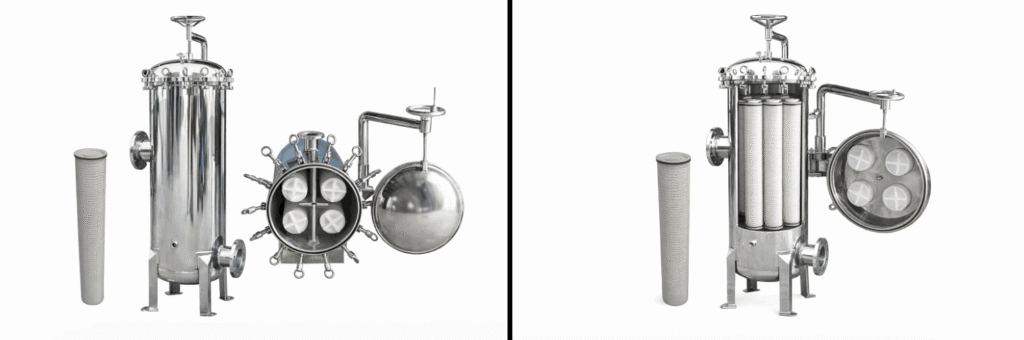
Engineering Principle: During a power plant startup, the Specific Contaminant Load consists of suspended iron oxides (Magnetite/Hematite) with a high tendency for surface adhesion. While standard pleated filters suffer from Surface Blinding, where a thin "cake layer" seals the media, Deep-Gradient High-Flow Cartridges utilize the entire radial thickness of the polymer matrix. This increases the Dirt Holding Capacity (DHC) by 3-5 times, ensuring that the filter remains permeable throughout the entire crud burst event without bypassing particles to the downstream resin beds.
📌 Executive Summary (For Plant Managers):
- The Benchmark: In 2025, leading environmental reports highlighted major power plants achieving Zero Liquid Discharge (ZLD) and 100% condensate recovery while slashing their filtration OPEX by 60%.
- The Bottleneck: The primary cause of wasted OPEX is the cold-startup "Iron Tsunami" (Crud Burst). Standard surface filters blind instantly when hit by this wave of magnetite and hematite, causing massive consumable waste.
- The Solution: The industry has shifted toward "Ultra-Long Life + Absolute Precision." ecofiltrone High-Flow Cartridges utilize a deep-gradient polymer structure that swallows the iron flood, protecting the resin beds and doubling change-out cycles to match 2025’s top cost-reduction data.
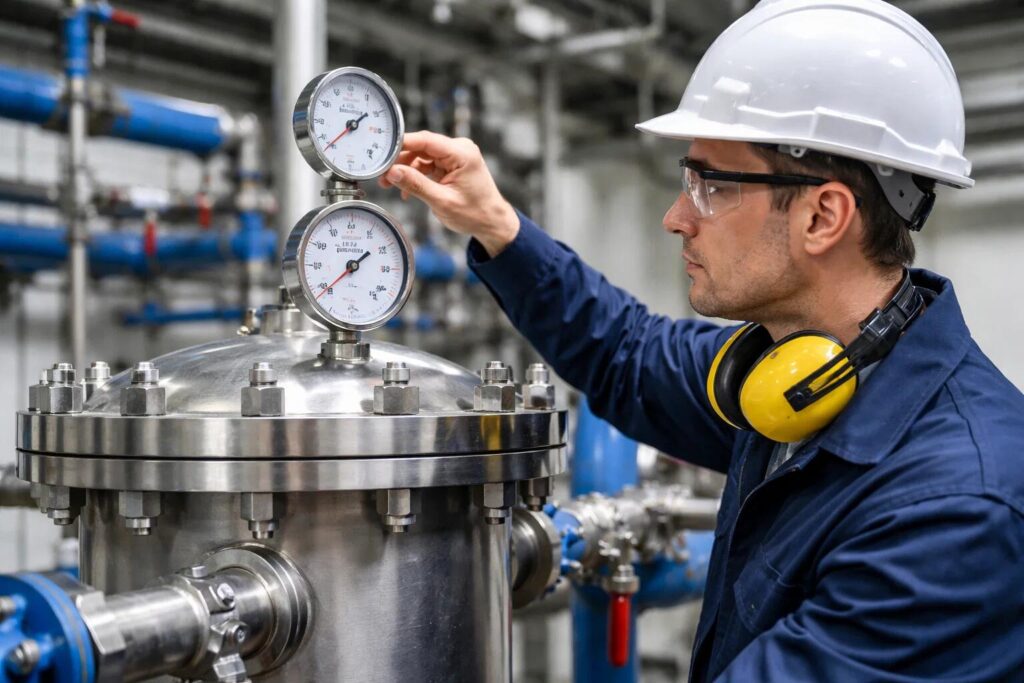
As a filtration diagnostic specialist working with thermal and nuclear power plants, I see the financial aftermath of a cold startup. The condensate turns black, the differential pressure (ΔP) spikes in two hours, and operators throw away thousands of dollars in ruined filters.
For years, plants accepted this as "the cost of doing business." But the 2025 environmental recaps proved that accepting short filter life is now obsolete. Here is the engineering reality of how top-tier plants are rethinking their Condensate Polishing units.
1. The Reality of the "Iron Tsunami"
During a unit startup, the condensate system flushes out extreme levels of suspended iron oxides.
Most plants use standard, single-layer pleated high-flow filters. When the "Iron Tsunami" hits, the heavy iron sludge smears across the outer surface of the pleats.
It creates an impermeable crust. The filter blinds instantly, forcing an emergency change-out before the unit has even reached full load. You are throwing away a filter where 90% of the media depth is completely unused.
2. The 2025 Shift: ZLD and Polymer Microfiltration
To achieve Zero Liquid Discharge (ZLD) and 100% condensate recovery, you cannot afford to have your security filters fail during a crud burst. If the iron breaches the filter, it permanently fouls the expensive Ion Exchange Resin downstream.
The plants that successfully cut their OPEX by 60% last year did so by abandoning standard surface filters. They upgraded to engineered microfiltration capable of absorbing the shock load while maintaining absolute retention.
3. The ecofiltrone Engineering Standard
At ecofiltrone, we benchmark our products against the most aggressive OPEX-reduction data in the industry. We engineer High-Flow Cartridges specifically to survive the startup crud burst:
- ✅ Deep-Gradient Architecture: We don’t just screen the iron; we absorb it. Our media features a progressive pore structure that draws the heavy magnetite deep into the matrix, leaving the surface open for flow.
- ✅ Ultra-Long Life: By utilizing the entire depth of the filter, we prevent premature ΔP spikes. Our clients consistently double their replacement cycles, turning a "sacrificial" filter into a long-term asset.
- ✅ Absolute Precision: We guarantee the capture of colloidal iron, ensuring your downstream resin beds remain pristine and your ZLD targets are met.
4. Audit Your Startup OPEX
If your condensate filters are dying in the first 48 hours of a startup, you are bleeding your maintenance budget.
📩 Take Action: Stop accepting premature failure. Send me your current OEM Part Number via DM. The ecofiltrone engineering team will provide a drop-in, deep-gradient replacement quote designed to align your plant with the 60% OPEX reduction benchmark of 2025.