If you operate a Seawater Reverse Osmosis (SWRO) plant in the Middle East or Southeast Asia, you know the struggle: Warm water is a biological time bomb.
While higher temperatures can help reduce osmotic pressure (saving energy), they also create the perfect incubator for bacteria, algae, and marine organisms.
The result? Biofouling.
Unlike mineral scaling, which is predictable, biofouling is nasty. It forms a slimy, insulating layer on your RO membranes that increases differential pressure ($\Delta P$), blocks flow channels, and is notoriously difficult to remove completely during CIP.
Here is how to optimize your pre-treatment strategy to keep the "bugs" at bay.
1. The "Post-Dechlorination" Danger Zone
Most plants dose Sodium Hypochlorite (Chlorine) at the intake to kill biologicals. However, because RO membranes are sensitive to chlorine, you must neutralize it (using SBS) before the water hits the membranes.
This creates a critical vulnerability.
Once the chlorine is gone, any surviving bacteria or nutrient-rich organic matter becomes a feast. If your physical filtration isn’t tight enough, the RO membrane becomes the breeding ground.
2. Why Standard Filters Fail in Warm Water
In warm, nutrient-rich waters (especially during Algal Blooms), standard nominally-rated filters often fail because:
- They act as "Bio-reactors": Cheap, loose filters can actually trap organics inside the media without killing them, allowing bacteria to grow through the filter and release downstream.
- Low Retention Efficiency: They allow microscopic algae cysts and colloidal organics to pass through, seeding the RO elements.
3. The Solution: High-Efficiency Physical Barriers
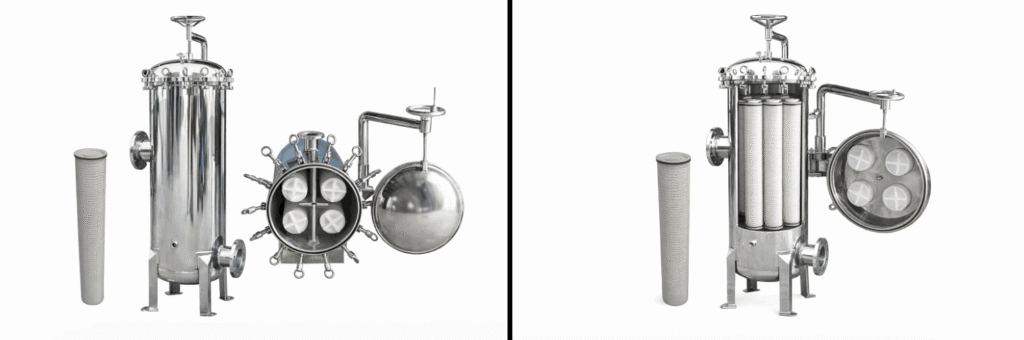
To fight biofouling, you need to reduce the Bio-Burden physically, not just chemically. This is where Absolute-Rated High Flow Filter Cartridges play a pivotal role.
- Go Absolute (Beta 5000): You need filters with a removal efficiency of 99.98% at 1 or 5 microns. This effectively removes the suspended solids and organic particulates that serve as "food" for bacteria.
- Rigid Construction: High-quality High Flow filters use rigid polypropylene cages. This prevents the filter pore structure from expanding under pressure surges, ensuring that trapped organic matter isn’t "squeezed" through to the clean side.
- Fewer Change-outs, Less Exposure: High Flow systems require fewer elements and fewer housing openings. This reduces the risk of introducing airborne contaminants during maintenance—a small but critical detail in hygiene control.
4. Operational Tip: Monitor Normalized Pressure Drop
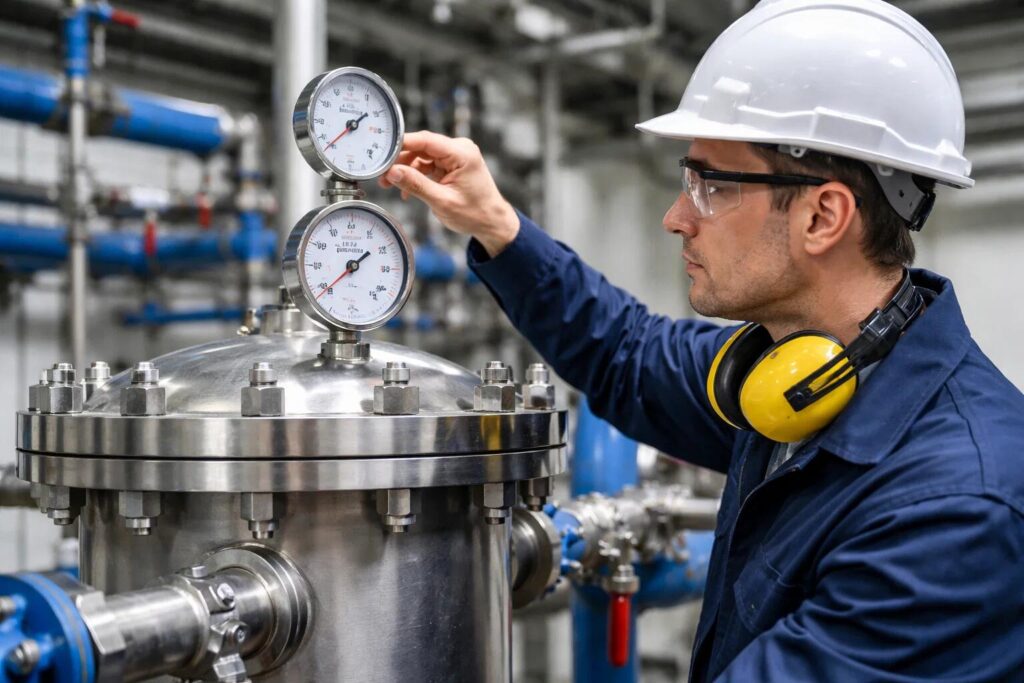
Don’t wait for the alarm. In warm waters, monitor the rate of pressure drop increase. If your cartridge filters are clogging faster than usual with a slimy residue, it’s a sign they are doing their job—catching the biomass before it hits the RO.
Pro Tip: If your cartridge filters stay clean but your RO membranes foul quickly, your filters are too coarse. Switch to a finer, higher-efficiency grade immediately.
Conclusion
You cannot change the seawater temperature, but you can change how you defend against it. By upgrading to high-efficiency High Flow cartridges, you starve the biofouling process by removing the particulate nutrient load.
👇 Discussion: Have you experienced rapid biofouling during summer months? What is your go-to strategy?