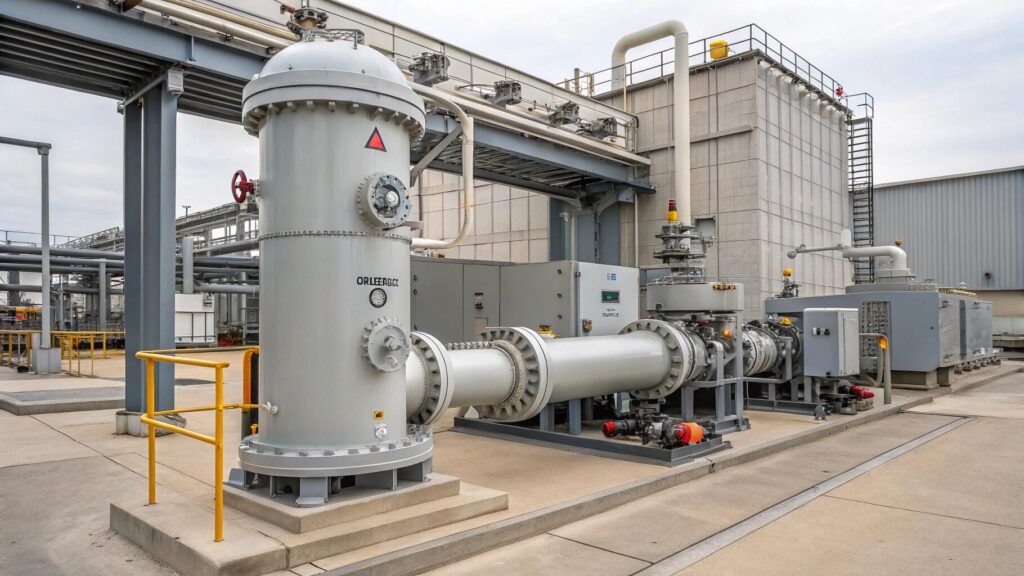
High Flow Cartridges vs. Standard Melt Blown Filters: Which Is Better for Your Process?
Are you constantly replacing dozens of small, standard filter cartridges? The process is slow, labor-intensive, and drives up your operational costs while creating massive production downtime.
High flow cartridges are better for high-volume applications where reducing labor and footprint is critical. Standard melt-blown filters are a good choice for lower flow rates or when initial capital cost is the primary concern, offering effective depth filtration in a traditional format.
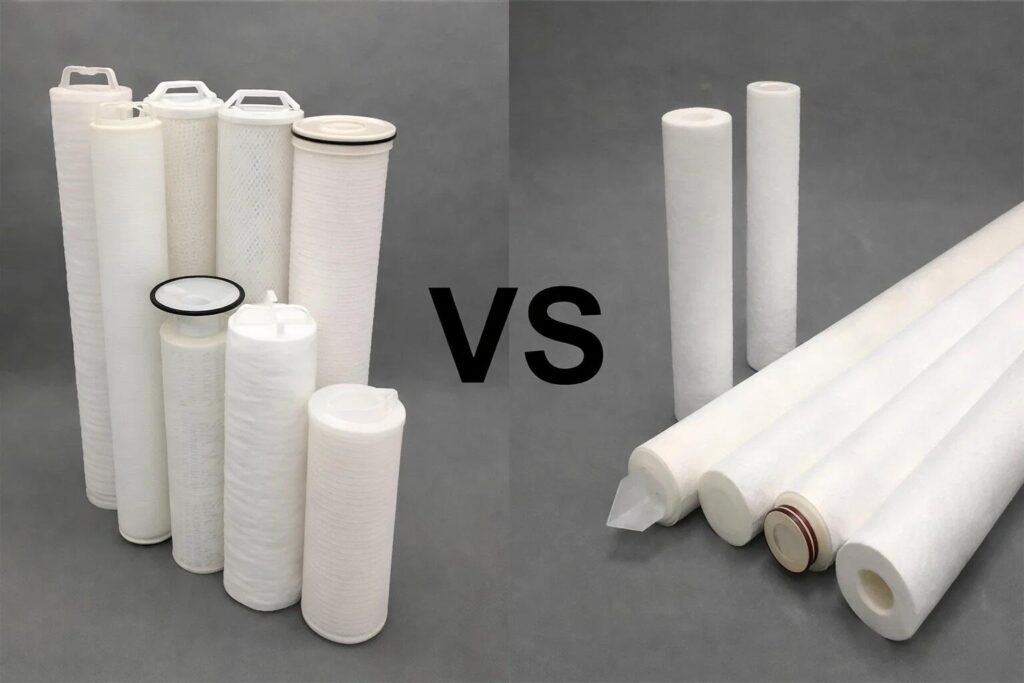
I remember walking through a large water treatment plant years ago. They had a massive wall of over one hundred individual filter housings with standard 40-inch melt-blown cartridges. Two operators spent their entire morning just changing them out. It was a perfect example of an inefficient system. When I introduced them to high flow technology, it was a revelation. We replaced that entire wall with a handful of high flow housings. The change was dramatic. It’s not just about using a bigger filter; it’s about a smarter filtration philosophy designed for large-scale industrial needs.
Bag Filters vs. High Flow Cartridges: What’s the Real Cost?
Are your cheap bag filters actually costing you more in the long run? Frequent change-outs, lower efficiency, and higher disposal volumes can quickly eat away at initial savings.
High flow cartridges offer a lower total cost of ownership for high-volume applications. While their upfront cost is higher, their long service life and reduced labor needs create significant savings over time compared to less efficient, labor-intensive bag filters.
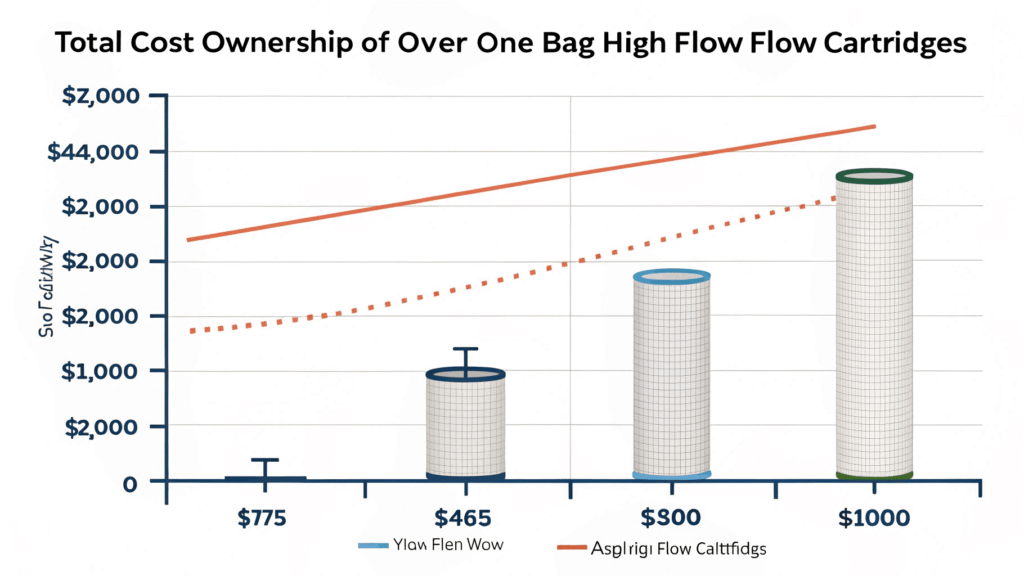
When you are looking at filtration costs, it’s very easy to just compare the price of one bag filter to one high flow cartridge. The bag filter will always look cheaper. But this is a mistake. The true cost includes labor, downtime, disposal, and performance. I always guide my clients to look at the total cost of ownership over a year.
A True Cost-Benefit Analysis
A high flow cartridge is an investment in efficiency. It’s designed for performance and longevity. A bag filter is a disposable commodity. Let’s compare them on the factors that really matter to your budget.
| Factor | High Flow Cartridge | Bag Filter |
|---|---|---|
| Initial Cost | High | Low |
| Labor Cost | Very Low (fewer changes) | High (frequent changes) |
| Filtration Efficiency | High (often absolute rated) | Lower (often nominal rated) |
| Disposal Costs | Low (fewer units to dispose) | High (many units to dispose) |
| System Footprint | Small | Large for equivalent flow |
Imagine you need to filter 1,000 gallons per minute. You might need 20 bag filters changed daily, versus one high flow cartridge changed weekly. The daily labor for the bags, plus the cost of 140 bags versus one cartridge per week, adds up fast. The high flow system almost always wins on total cost.
Are There Cost-Effective Alternatives to Parker, Pall, or 3M High Flow Filters?
Are premium brand-name filters breaking your maintenance budget? The high cost can make you feel stuck with an older, less efficient system, unable to afford an upgrade.
Yes, absolutely. Many reputable manufacturers produce high-quality, cost-effective high flow filters that serve as direct retrofits. The key is to verify their performance data, quality certifications, and ensure they offer reliable technical support before making a switch.
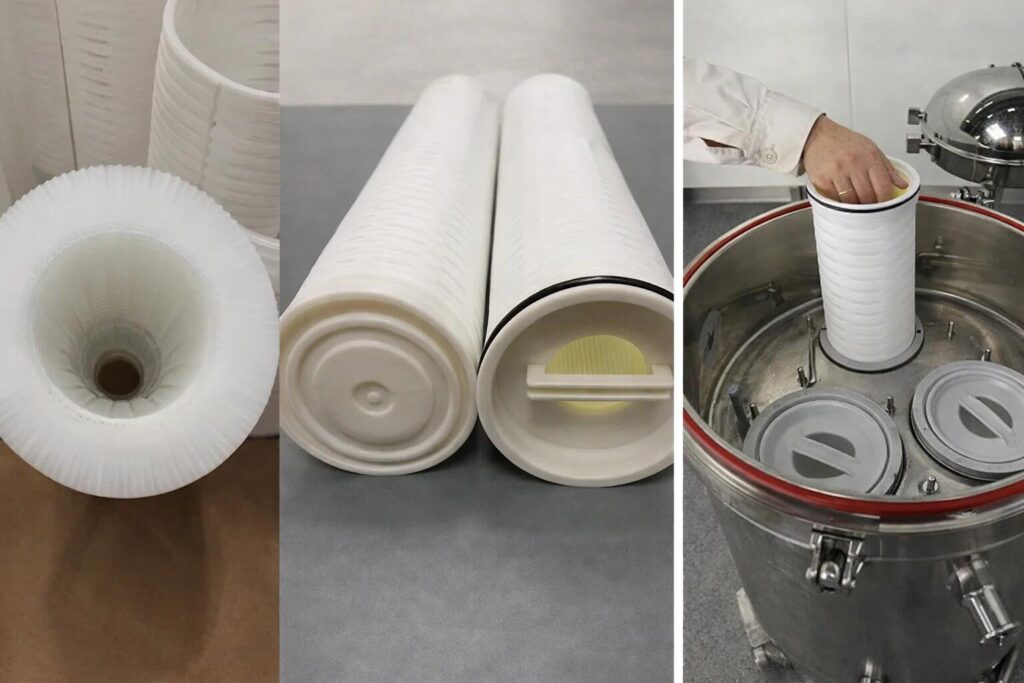
This is a question I get all the time. Engineers like Jacky know that brands like Pall, Parker, and 3M make excellent products, but their prices can be very high. Many companies feel they have no other choice. The good news is that the market has changed. There are many excellent manufacturers today that produce filters that meet or even exceed the performance of the big brands, but at a much more reasonable price. However, you have to do your homework to ensure you are getting a quality product.
How to Vet an Alternative Supplier
"Cost-effective" does not mean "cheap." It means getting the performance you need for a better price. Here is my simple checklist for evaluating a potential new supplier.
- Request Performance Data: Don’t just take their word for it. Ask for documentation showing pressure drop curves and particle removal efficiency tests. Compare this data directly to the spec sheet of the filter you are currently using. A good supplier will have this readily available.
- Check for Quality Certifications: At a minimum, the manufacturer should be ISO 9001 certified. This tells you they have a documented quality control system in place.
- Ask for a Trial: The ultimate test is in your own process. Ask for a sample cartridge to test in one of your housings. Run it and compare its lifespan and performance side-by-side with your current filter. I once helped a client do this, and they found an alternative that performed identically for 25% less cost, saving them tens of thousands of dollars a year.
Vertical vs. Horizontal High Flow Filter Housings: How Do You Decide?
Is the orientation of your filter housing just a minor detail? Choosing the wrong one can lead to difficult maintenance, wasted floor space, and even safety risks for operators.
Choose vertical housings to save floor space and for easier change-outs with a crane. Choose horizontal housings when overhead height is limited or for applications where you need faster, tool-free access and want to avoid using lifting devices for every change-out.
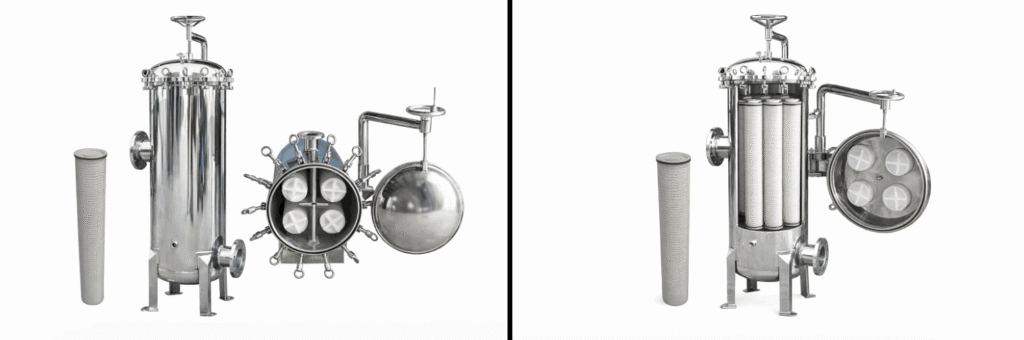
When designing a new high flow system, the housing orientation is a critical decision. It affects your plant layout, your maintenance procedures, and your team’s safety. There is no single "best" choice; the right answer depends entirely on your specific facility and operational priorities. I’ve installed both types in many different plants, and each has clear pros and cons.
Comparing Orientations
Let’s break down the key decision factors.
- Floor Space: This is the most obvious difference. A vertical housing has a very small footprint, which is perfect for crowded facilities. A horizontal housing takes up a much longer strip of floor space.
- Change-Out Process: With a vertical housing, you need overhead clearance and typically a small davit arm or crane to lift the heavy cartridge out. This is a very safe and controlled process. With a horizontal housing, the operator can often slide the cartridge straight out at waist level after opening the end cap, which can be faster and doesn’t require lifting equipment.
- Ergonomics and Safety: Horizontal change-outs can be more ergonomic if designed correctly. However, a vertical change-out using a proper lifting device completely removes the strain of handling a heavy, wet cartridge.
I generally recommend vertical housings for new constructions where floor space is at a premium. For retrofits in buildings with low ceilings, or where speed of change-out is the absolute top priority, horizontal housings can be a better fit.
What Key Features Should You Look for in a High Flow Filter Manufacturer?
Do you feel unsupported by your current filter supplier? A cheap price is meaningless if you can’t get the technical support or reliable supply you need when problems arise.
Look for a manufacturer that provides strong technical support, consistent product quality, and a reliable supply chain. They should act as a partner, helping you optimize your process rather than just selling you a product. Detailed validation guides and direct access to engineers are key features.

After years in this industry, I can tell you that the filter itself is only part of the solution. The company behind the filter is just as important. When things go wrong in your process, you need a partner you can call who will help you solve the problem. A low-price supplier who doesn’t answer the phone is no help at all.
Beyond the Product: What Makes a Great Partner?
When I’m evaluating a new filter manufacturer for my clients, I look for these specific features.
- Responsive Technical Support: Can you get an experienced engineer on the phone to discuss your application? A great manufacturer will work with you to analyze your water quality, review your process, and recommend the best possible filtration solution. They should be a resource, not just a vendor.
- Comprehensive Documentation: They should provide detailed validation guides, installation instructions, and performance data for all their products. This shows they are confident in their quality and are transparent about their performance.
- Manufacturing Consistency: Quality control is everything. A good manufacturer uses high-quality raw materials and has strict ISO-certified manufacturing processes to ensure that the filter you buy today performs exactly like the one you buy six months from now.
- Reliable Supply Chain: Can they deliver filters when you need them? A supplier with a robust inventory and reliable logistics is essential to keeping your plant running without interruption.
Finding a manufacturer with these features builds a long-term relationship based on trust, not just on price.
Conclusion
Choosing the right filter system involves balancing cost, performance, and operational needs. High flow cartridges offer clear advantages for large-scale processes, and selecting the right supplier is as critical as selecting the filter itself.