⚠️ Common Mistakes When Replacing Pall / Parker High Flow Cartridges (And How to Fix Them)
In high-stakes filtration—whether it’s RO pre-treatment, amine loops, or condensate polishing—Pall Ultipleat® and Parker ParMax™ are the industry titans.
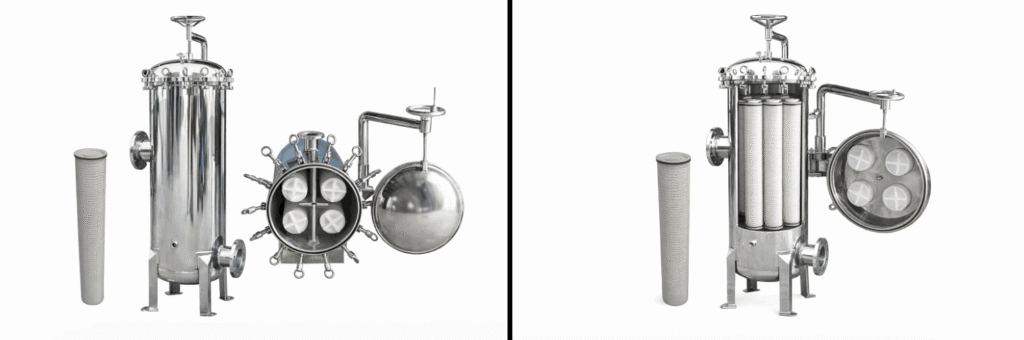
These large-diameter (6-inch) filters are engineering marvels designed for massive flow rates and "Inside-Out" dirt capture. But their sophisticated design means you can’t just "shove them in" like a standard melt-blown filter.
We see the same installation errors repeated in plants worldwide. These mistakes lead to O-ring damage, bypass leakage, and premature change-outs.
Here are the top mistakes to watch out for during your next maintenance cycle.
1. The "Dry Shove" (O-Ring Failure)
- The Mistake: Operators trying to push the heavy 60-inch cartridge into the housing tubesheet without lubricating the O-ring (or Chevron seal).
- The Consequence: These filters use large, tight-fitting seals to prevent bypass. Inserting them dry often causes the O-ring to "roll," pinch, or even slice off. A damaged O-ring = 100% Bypass. The filter is now useless.
- The Fix: Always lubricate the O-ring with a compatible lubricant (or clean process fluid) before installation. It should slide in, not fight you.
2. Ignoring the "Twist" (Parker Specific)
- The Mistake: Pushing a Parker ParMax or MegaFlow cartridge straight in without rotating it.
- The Mechanics: Many Parker High Flow designs feature a specific O-ring seating mechanism that benefits from a "Push & Twist" motion.
- The Fix: As you insert the final few inches, give the cartridge a quarter-turn. This helps the O-ring seat evenly in the bore without rolling out of its groove.
3. The Flow Direction Mix-Up (Inside-Out vs. Outside-In)
- The Mistake: Assuming the flow is "Outside-In" like standard filters.
- The Reality: Both Pall Ultipleat and Parker ParMax typically utilize "Inside-Out" flow geometry. The dirt is trapped inside the cartridge core.
- The Consequence: If you plumb the housing backwards (or install a knock-off filter with the wrong flow path), the pleats will balloon outward and rupture, sending all the captured dirt downstream.
- The Fix: Always verify the flow arrow on the housing. When removing a spent filter, the outside should look relatively clean; the inside should be black/brown.
4. Forgetting the "Locking" Tab (Pall Specific)
- The Mistake: On certain Pall housing designs (especially horizontal ones), failing to engage the locking tab or retainer plate after insertion.
- The Consequence: Under high flow surges, the cartridge can back out of the tubesheet unseated.
- The Fix: Ensure the handle or locking mechanism clicks into place or is secured by the retaining plate before closing the vessel door.
5. Neglecting the Housing "Belly" Clean
- The Mistake: Pulling out the dirty filters (which hold the dirt inside) but failing to flush the "clean side" of the vessel before installing new ones.
- The Reality: Even with Inside-Out flow, the vessel drains can accumulate sludge during change-outs.
- The Fix: Always rinse the vessel bottom and inspect the tubesheet sealing surface for scratches or old O-ring debris before installing fresh filters.
https://ecofiltrone.com/pall-replacements/
Conclusion
A High Flow cartridge is a precision instrument, not a commodity. A 5-minute rush job during installation can waste a $300+ cartridge or, worse, endanger your downstream RO membranes.
Train your team: Lube, Twist, and Check the Seal.
👇 Discussion: Have you ever pulled out a filter and found the O-ring missing or sliced? It happens more than you think.