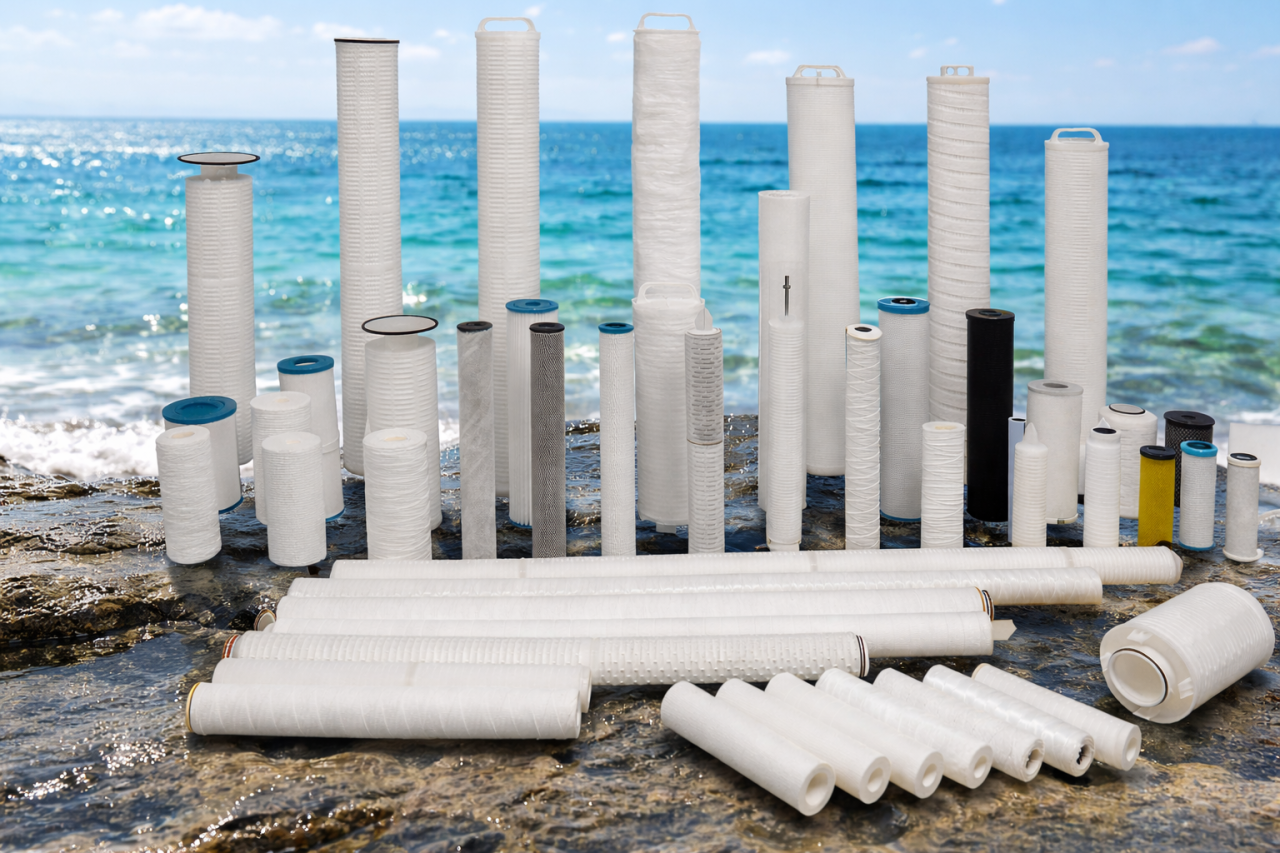
🥊 Depth Filters vs. Pleated Filters: Which is the Right Choice for Your Process?
One of the most common questions we get from Process Engineers is: "Should I use a Melt Blown (Depth) cartridge or a High Flow (Pleated) cartridge?"
The answer is never simple. It depends entirely on what you are trying to remove.
Choosing the wrong type doesn’t just mean "poor filtration"—it means frequent change-outs, high pressure drops, and wasted budget.
Let’s break down the physics of these two technologies so you can make the right decision for your application.
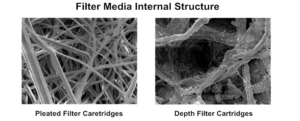
1. Depth Filtration: The "Maze" (Melt Blown / String Wound)
Think of a depth filter as a thick sponge or a dense forest.
- How it works: Fluid has to navigate a tortuous path through the media. Contaminants get trapped inside the matrix, not just on the surface.
- The Superpower: Deformable Contaminants. If you are filtering gels, colloids, or "slimy" particles, depth filters are superior. They trap these soft particles deep inside the structure, preventing them from forming an impermeable "cake" on the surface instantly.
- Best For: Clarification, removing gels/organics, and applications with a wide distribution of particle sizes.
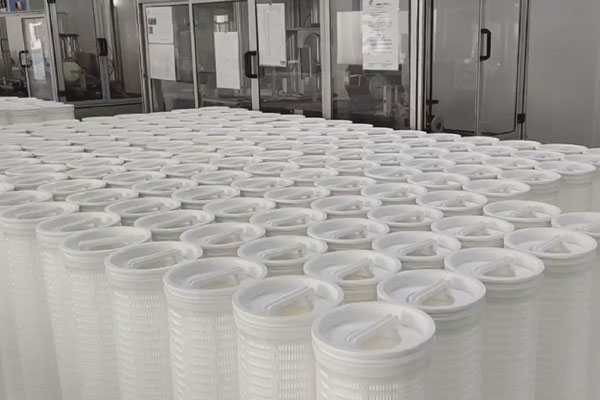
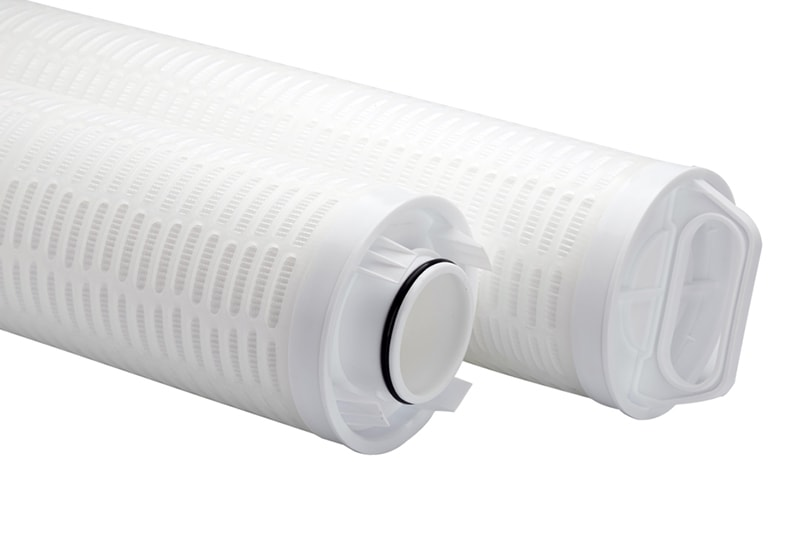
2. Pleated Filtration: The "Surface Area King" (High Flow Cartridges)
Think of a pleated filter as a massive screen folded like an accordion.
- How it works: It maximizes surface area (often 5x to 10x more than a depth filter). While it has some depth characteristics, its main strength is spreading the dirt over a huge area.
- The Superpower: Low Pressure Drop & Hard Particles. Because of the massive surface area, the flow resistance (Delta P) is incredibly low. This allows for high flow rates and long service life when dealing with distinct, hard particles (sand, rust, scale).
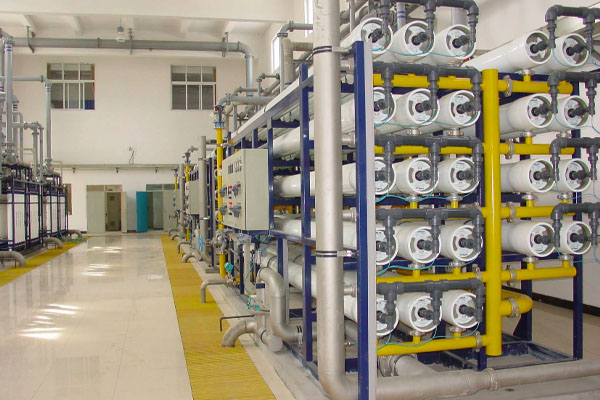
- Best For: High flow rate applications (RO Pre-treatment), removing hard particulates, and absolute-rated critical filtration (Beta 5000).
3. The Decision Matrix: How to Choose?
Here is a quick rule of thumb for your next project:
| Feature | Choose Depth Filter | Choose Pleated (High Flow) Filter |
|---|---|---|
| Contaminant Type | Gels, Slime, Deformable Particles | Hard Particles, Sand, Rust, Crystals |
| Particle Load | High Load of diverse sizes | Low to Medium Load of specific sizes |
| Flow Rate | Low to Medium | High to Very High |
| Filtration Goal | Clarification (Nominal) | Absolute Retention / RO Protection |
| Economic Driver | Low Initial Cost per Filter | Low Total Cost of Ownership (Long Life) |
Conclusion
Don’t just buy a filter because it fits the housing.
- If you are fighting gels and slime, stick with Depth.
- If you are fighting pressure drop and hard dirt, upgrade to Pleated.
Matching the "Filter Personality" to the "Dirt Personality" is the secret to a headache-free process.
👇 Discussion: Which type of filter gives you the most trouble in your plant?