Why Are High Flow Filters Essential for RO Pre-Filtration in Desalination?
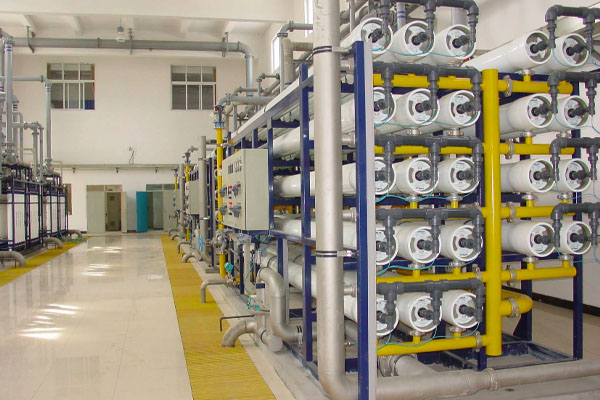
Are your expensive RO membranes fouling prematurely? This causes costly production shutdowns for cleaning, reduces membrane lifespan, and drives up the operational cost of your entire desalination plant.
High flow filters are essential because they provide robust, absolute-rated protection for reverse osmosis membranes. By efficiently removing silt and sediment, a single high flow cartridge extends membrane life, reduces cleaning frequency, and lowers the overall cost per gallon of produced water.
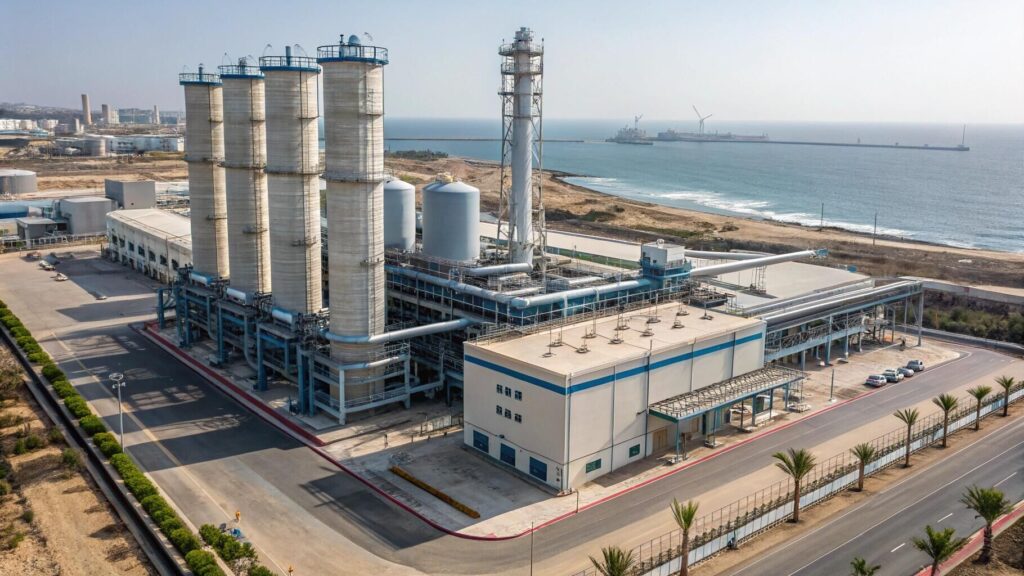
The first time I worked on a large-scale seawater reverse osmosis (SWRO) project, the importance of pre-filtration became crystal clear. The RO membranes are the heart of the plant, but they are incredibly sensitive. Any particulate matter that reaches them can cause irreversible damage or fouling. We installed a bank of high flow filter housings just before the high-pressure pumps. These filters acted as the final gatekeepers, ensuring only clean, particle-free water reached the membranes. This single step is arguably one of the most critical for ensuring the long-term economic viability of a desalination plant.
How Can High Flow Filters Optimize Water Treatment in Power Plants?
Is your power plant struggling with scaling and fouling in boilers and cooling towers? Inefficient filtration of intake water leads to reduced thermal efficiency, increased maintenance, and unplanned outages.
High flow filters optimize power plant water treatment by reliably removing suspended solids from large volumes of raw water. Their high dirt-holding capacity and low maintenance needs ensure a consistent supply of clean water, protecting critical equipment and maximizing plant uptime.
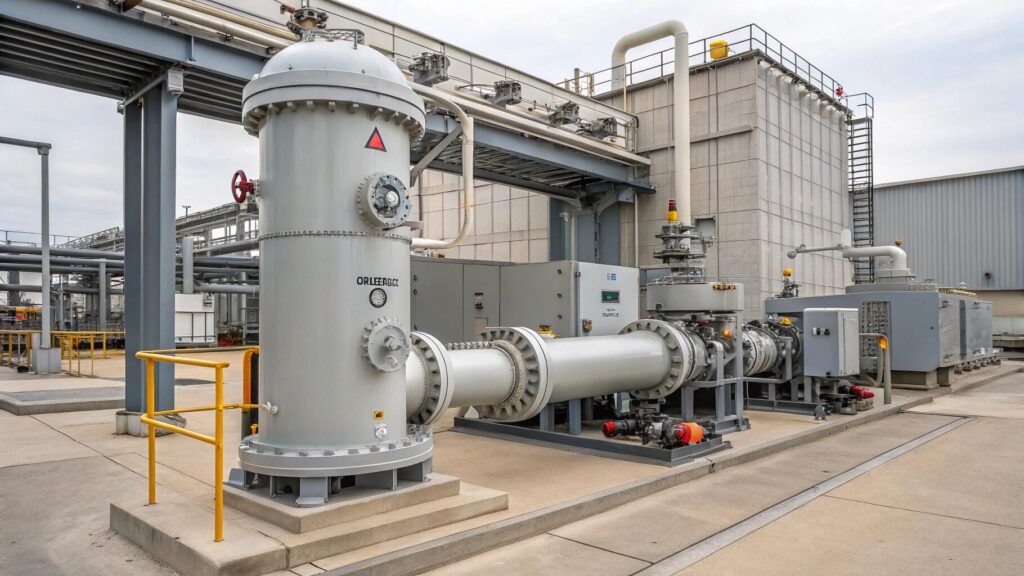
Power plants are huge consumers of water. Whether it’s for generating steam in a boiler or for cooling tower makeup, the water quality has to be right. I once consulted for a plant that was having major issues with scaling in their heat exchangers. The cause was traced back to inconsistent performance from their old sand filters. We recommended a retrofit using high flow cartridge filters. The result was a more reliable and much lower-maintenance system that provided consistent water quality, which directly improved their plant’s thermal efficiency.
Protecting Critical Plant Systems
In a power plant, water is used in two main critical systems: boiler feed water and cooling tower water. Each has its own challenges, but high flow filters are a perfect fit for both.
- Boiler Feed Water: The water fed to a boiler must be exceptionally pure to prevent scale buildup on the turbine blades. High flow filters are often used after primary treatment to provide a final polish, ensuring no suspended solids get through.
- Cooling Tower Makeup: Water from rivers or lakes is used to replenish cooling towers. This water is often high in silt and organic matter. High flow filters can process huge volumes of this water efficiently, preventing fouling of the tower fill and heat exchangers.
| Feature | Sand Filters | High Flow Cartridges |
|---|---|---|
| Footprint | Very Large | Compact |
| Media Disposal | No media disposal | Cartridge disposal |
| Filtration Quality | Variable, subject to channeling | Consistent, absolute-rated |
| Maintenance | Frequent backwashing | Simple cartridge change-out |
For a 24/7 operation like a power plant, the reliability and simplicity of high flow cartridges are major advantages.
What Makes High Flow Filters Ideal for Oil & Gas Wastewater Treatment?
Is your oil and gas operation struggling with treating difficult produced water? This wastewater is often hot, full of solids, and can quickly foul or destroy standard filtration equipment.
High flow filters are ideal due to their robust construction and high-solids handling capability. They can operate in the harsh conditions of oil and gas wastewater, effectively protecting injection wells from plugging and processing large volumes of produced water with a small footprint.
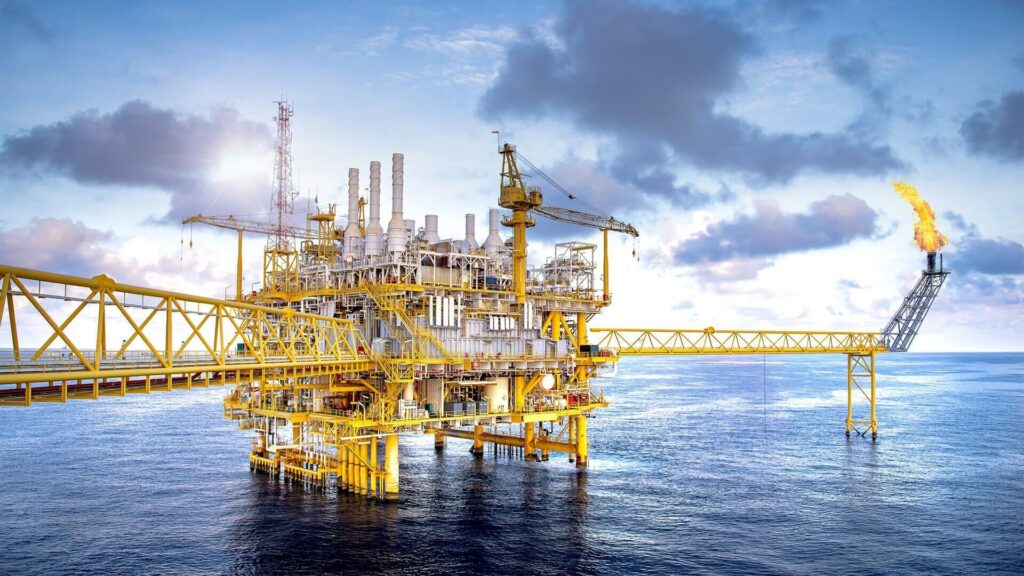
The water that comes up from an oil well, known as "produced water," is one of the toughest filtration challenges out there. It’s often a mix of saltwater, oil, and abrasive solids like sand. I worked with an engineer, Jacky, on a water injection project where they were re-injecting this produced water back underground to maintain reservoir pressure. Their existing system was constantly failing. We specified a system using high flow polypropylene cartridges. Their robust design and large surface area could handle the high solids load, and the polypropylene material was compatible with the residual hydrocarbons. The new system drastically reduced downtime and protected the injection well from getting plugged.
Handling a Difficult Waste Stream
Produced water treatment is all about durability and capacity. High flow filters deliver on both fronts. The inside-to-outside flow path is a key feature here. It allows the filter to capture a large amount of solids without the pressure drop increasing too quickly. This is essential for a waste stream where the solids loading can fluctuate. Furthermore, the contained nature of a cartridge system is a big safety advantage over open systems, especially on an offshore platform where space is tight and environmental protection is critical. These filters are commonly used to treat water for disposal or before it enters more advanced treatment systems like membrane filtration, acting as a crucial bulk removal step.
How Do High Flow Filters Ensure Quality in Food & Beverage Production?
Are you concerned about particle contamination in your ingredient water? Inconsistent water quality can affect your product’s taste, clarity, and shelf life, putting your brand’s reputation at risk.
High flow filters ensure quality by providing a reliable, high-purity barrier against particulates. They deliver consistently clean water at the high flow rates needed for bottling and processing, ensuring that ingredient water and utility water never compromise the final product.
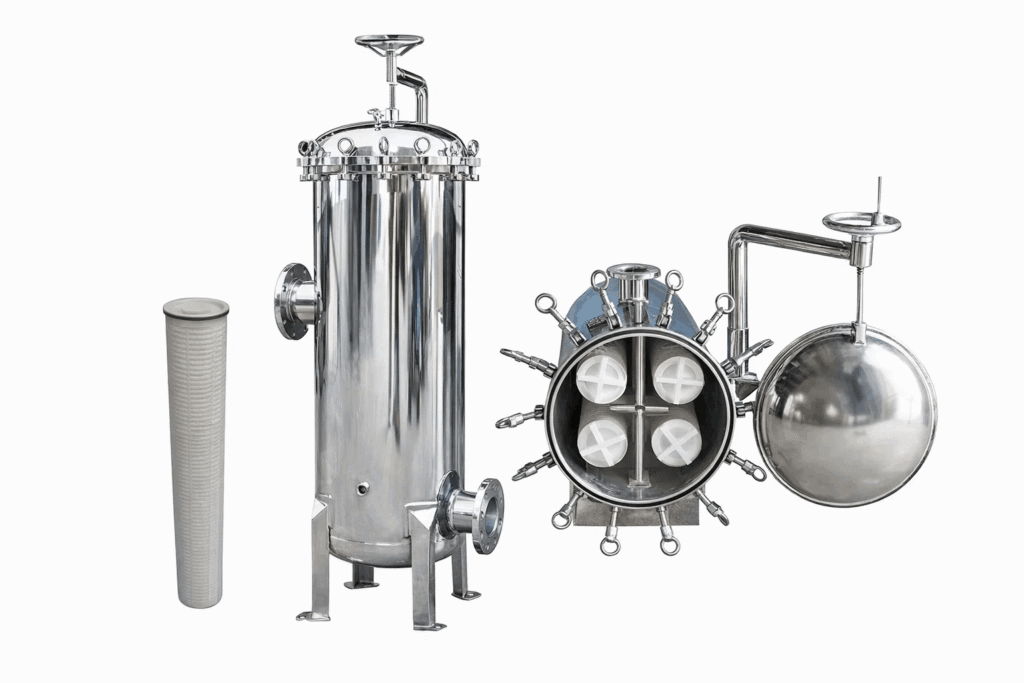
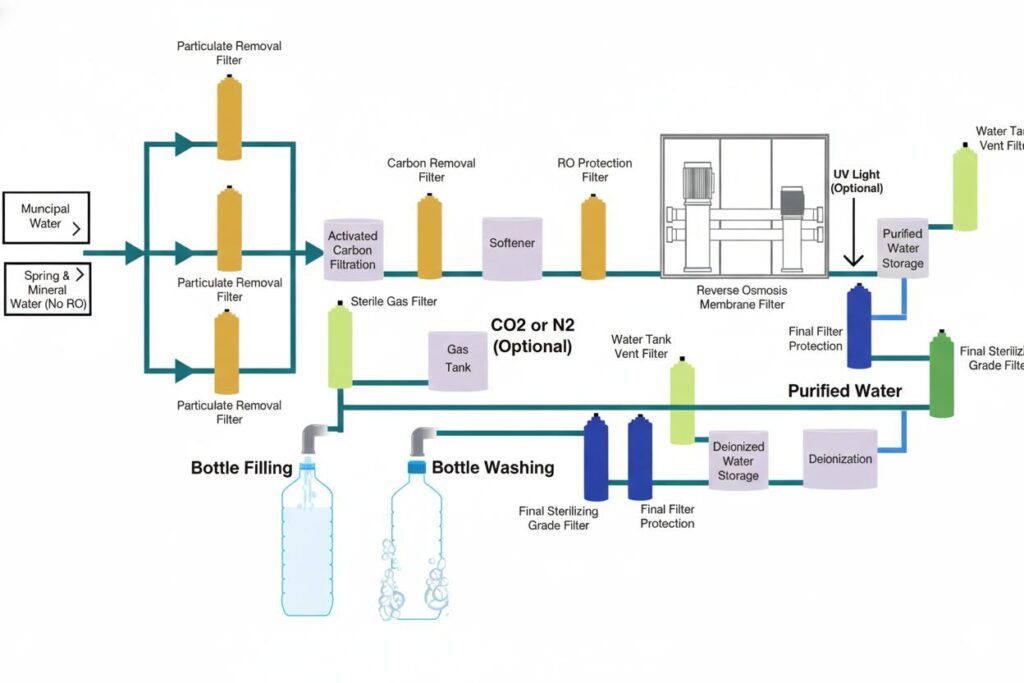
In the food and beverage industry, water is not just water; it’s an ingredient. I learned this early in my career when working with a large soft drink bottler. They had a problem with occasional haziness in their final product. The issue was traced to microscopic particles in their municipal water supply that were getting past their existing filters. We installed absolute-rated 1-micron high flow filters on their main water intake line. The problem disappeared. The filters provided a reliable final polish, ensuring every drop of water that went into their products was perfectly clear.
From Ingredient Water to Plant Utilities
High flow filters play several key roles in a food and beverage plant.
- Ingredient Water: This is the water that ends up in the final product, such as a soft drink, beer, or bottled water. It must be free of any particles that could affect taste or appearance. High flow filters provide an excellent polishing step to guarantee this.
- Bottle and Can Rinsing: Before being filled, containers are rinsed with high-purity water. High flow filters ensure that this rinse water doesn’t re-contaminate the clean containers with particles.
- General Utility Water: Water used for general plant cleaning and equipment washing also needs to be clean to prevent spotting and contamination. High flow systems can provide high volumes of clean utility water for the entire plant from a central location.
The high flow rates and sanitary design options make these filters a perfect match for the industry’s demands.
Why Have High Flow Cartridges Become the Standard for Process Water Filtration?
Are you using multiple, small filter housings for your plant’s general process water? This approach is inefficient, requires a lot of maintenance, and takes up valuable floor space.
High flow cartridges have become the standard because they offer the lowest total cost of ownership for high-volume process water. Their efficiency, small footprint, and low labor requirements have made them the go-to solution for modern industrial plants.
If you walk into a newly built manufacturing plant today, whether it’s for automotive parts, electronics, or chemicals, you will likely see a high flow filter system providing the main process water. The reason is simple: it’s the most efficient way to do it. The old way of using dozens of small filters has been replaced by this smarter technology. It’s a classic engineering case of improving efficiency by scaling up intelligently. Instead of managing many small, inefficient components, you manage a few large, highly efficient ones.
The New Workhorse of Industrial Filtration
The shift to high flow systems for general process water is driven by a few key factors that every plant manager cares about.
- Cost Efficiency: While the initial hardware cost might be similar, the long-term savings are significant. Fewer filter change-outs mean lower labor costs. Longer filter life means lower consumable costs. It all adds up.
- Space Savings: In modern plants, floor space is expensive. A high flow system can reduce the footprint of the filtration system by 50% or more compared to a traditional cartridge system.
- Reliability: A simpler system with fewer components and fewer seal points is inherently more reliable. This means less risk of leaks and less chance of system bypass, leading to more consistent water quality across the entire plant.
For any application requiring more than 100 gallons per minute of clean water, high flow filtration is no longer just an option; it’s the industry standard.
Conclusion
High flow filters are a versatile, high-performance solution for large-scale industrial water treatment. They provide efficiency, reliability, and cost savings across a wide range of critical applications.